
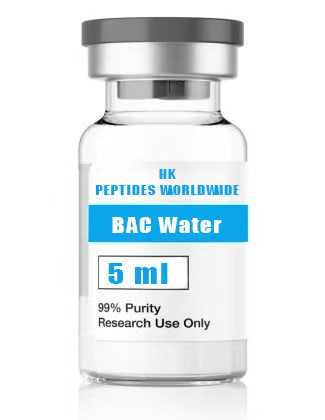
Bacteriostatic Water 5 mg Research Solution
Bacteriostatic Water 5 mg Research Solution is a sterile diluent used in laboratory settings to reconstitute lyophilized research compounds. Each vial contains sterile water with 0.9% benzyl alcohol as a bacteriostatic preservative, allowing multiple withdrawals with a single vial under proper aseptic technique. Researchers in the United States source this solution for peptide and protein studies where a preserved, multi-use diluent is more practical than single-use sterile water.
This product is sold strictly for research and laboratory use. It is not intended for human or veterinary injection, and it is not a treatment for any condition.
What Bacteriostatic Water 5 mg Research Solution Is
Bacteriostatic water is sterile water that contains benzyl alcohol at roughly 0.9%, which inhibits bacterial growth inside the vial after the first puncture. The “5 mg” reference describes the fill or labeled quantity used in the research supply chain; the functional specification researchers care about is the preservative concentration and sterility. This makes it distinct from sterile water for injection, which contains no preservative and is intended for single use.
In practice, the solution serves one core purpose: dissolving a lyophilized powder so it can be measured, aliquoted, and studied. Because the benzyl alcohol slows microbial growth, a single vial can support multiple research sessions when handled correctly.
Why Researchers Choose BAC Water 5 mg
Multi-Use Convenience in the Lab
A preserved diluent reduces waste during study protocols that require repeated reconstitution. Rather than opening a fresh sterile water vial each time, a lab can draw from one bacteriostatic vial across a series of aliquots, provided storage and handling standards are followed.
Predictable Reconstitution Behavior
Benzyl alcohol does not interfere with most peptide dissolution, and it gives researchers a consistent, documented diluent composition. That consistency matters when comparing results across batches or replicates.
Clear Labeling and Sourcing
Reputable suppliers label preservative concentration, volume, and storage requirements clearly. Researchers comparing research-grade peptide supplies should confirm that each vial lists these details before purchase.
BAC Water 5 mg Specifications at a Glance
| Attribute | Detail |
|---|---|
| Product type | Sterile bacteriostatic diluent |
| Preservative | Benzyl alcohol, approximately 0.9% |
| Intended use | Laboratory reconstitution of research compounds |
| Handling | Aseptic technique; store per label instructions |
| Market | Research supply, United States |
Always defer to the supplier’s certificate of analysis and label for the exact volume and concentration of a specific lot.
BAC Water Dosage and Reconstitution in Research Contexts
“BAC Water dosage” is a phrase that shows up often in search, but it deserves clarification. In a research setting, there is no therapeutic dosage—bacteriostatic water is a diluent, not an active compound. What researchers actually calculate is the reconstitution ratio: how much diluent to add to a known quantity of powder to reach a target concentration.
How Reconstitution Math Works
- Note the mass of the lyophilized compound in the vial.
- Decide the target concentration for your assay.
- Divide mass by target concentration to get the volume of diluent to add.
- Add the diluent slowly down the vial wall, then swirl gently—do not shake—until dissolved.
Handling and Storage Notes
Benzyl alcohol is not appropriate for every study. Some cell culture applications and certain sensitive proteins are affected by preservatives, so sterile water without preservative may be the better choice. Store vials as directed, keep them capped between uses, and discard any vial showing cloudiness or particulate matter.
How to Choose a Supplier When You Buy BAC Water Online
Searching to buy BAC Water online returns many options, and quality varies widely. Use a short checklist before ordering:
- Documentation: Does the supplier provide a certificate of analysis and clear sterility claims?
- Labeling: Are preservative concentration, volume, and storage conditions printed on the vial?
- Packaging: Is the product shipped in tamper-evident, properly sealed packaging?
- Research-use disclaimer: Does the listing state clearly that the product is for laboratory use only?
For buyers searching “BAC Water near me,” note that most research suppliers ship nationally rather than operating storefronts, so domestic shipping speed and cold-chain or protective packaging matter more than physical proximity. Reputable peptide research suppliers will answer specification questions before you commit.
Red Flags to Avoid
Be cautious with listings that make health claims, omit preservative details, or show no testing documentation. A diluent is a simple product, but sterility is not optional in a lab.
BAC Water for Sale: What US Researchers Should Verify
When comparing BAC Water for sale listings in the United States, confirm three things: the exact fill volume, the benzyl alcohol percentage, and the expiration or retest date. Ask whether the supplier ships with protective packaging to prevent vial breakage, and check return or replacement policies for damaged shipments.
Price is a weak quality signal here. A lower-cost vial with no documentation is a poor trade against a slightly higher-priced vial with a certificate of analysis. Many researchers also bundle diluent with Hk peptides or other compounds to consolidate shipping and ensure compatibility between diluent and study material.
Safety, Storage, and Limitations
Bacteriostatic water is not a substitute for sterile water in applications where benzyl alcohol is contraindicated, including certain neonatal and ophthalmic contexts in clinical settings. In the lab, the main risks are contamination from poor aseptic technique and degradation from improper storage.
Keep vials sealed until use, wipe septa with an appropriate disinfectant before each withdrawal, and never reinsert a used needle. Follow your institution’s biosafety and chemical handling guidance for benzyl alcohol, and dispose of sharps and waste per local regulations.
Frequently Asked Questions
Is bacteriostatic water the same as sterile water?
No. Both are sterile, but bacteriostatic water contains about 0.9% benzyl alcohol to inhibit bacterial growth, while sterile water for injection contains no preservative and is single-use.
What does “5 mg” mean on a Bacteriostatic Water 5 mg Research Solution?
It refers to the labeled fill or quantity for that research SKU. The key specification for researchers is the preservative concentration and sterility, not the milligram figure alone, so always read the vial label.
Can I use BAC water to reconstitute any peptide?
Most lyophilized peptides dissolve well in it, but proteins and cell culture work sensitive to benzyl alcohol may require preservative-free sterile water. Check your protocol first.
Where can I buy BAC Water online in the US?
Purchase from suppliers that publish certificates of analysis, label preservative concentration clearly, and state a research-use-only disclaimer. Verify shipping and packaging before ordering.
Does bacteriostatic water expire?
Yes. Preserved diluents carry an expiration or retest date, and opened vials degrade faster. Follow the label and your lab’s policies on discarding opened vials.
Is BAC water legal to purchase in the United States?
It is widely sold as a laboratory reagent. Buyers are responsible for using it lawfully and strictly for research purposes, not for human or veterinary administration.
Be the first to review “Bacteriostatic Water 5 mg Research Solution”
Related products
Research Grade Peptide
Research Grade Peptide
Research Grade Peptide
Research Grade Peptide

Research Grade Peptide

Research Grade Peptide
Research Grade Peptide
Research Grade Peptide
Reviews
There are no reviews yet.