
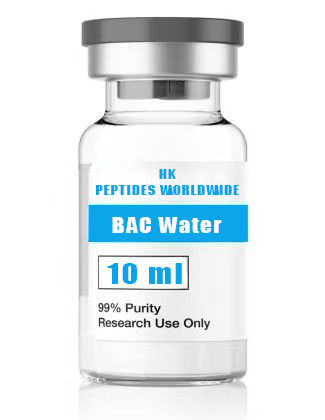
BAC Water 10 mg Research Solution
Original price was: $14.00.$11.00Current price is: $11.00.
Bulk Price for 10 Vials.
Bacteriostatic water research solution in a sealed vial, formulated with benzyl alcohol as a preservative for laboratory reconstitution of lyophilized peptides. Labeled for research use only—not for human or veterinary use. Ideal for peptide researchers and lab procurement in the United States.
BAC Water 10 mg Research Solution: A Complete Guide for Laboratory Professionals
Bacteriostatic water (BAC water) is a sterile solvent used in laboratory settings to reconstitute lyophilized peptides and other research compounds. The BAC Water 10 mg Research Solution format refers to a small-volume vial containing benzyl alcohol–preserved water intended for research use. This guide explains what the product is, how researchers handle it, and what to verify before purchasing in the United States. It is written for laboratory buyers, research procurement staff, and peptide researchers sourcing materials from suppliers such as HK Peptides Worldwide.
What Is BAC Water 10 mg Research Solution?
Bacteriostatic water is purified water that contains a small amount of benzyl alcohol (commonly around 0.9%) as a bacteriostatic preservative. The preservative slows bacterial growth, which is why the solution is used to reconstitute compounds that may be used over multiple sessions in a lab.
The “10 mg” label typically refers to the volume or fill of the research solution vial as sold in the research supply market. It is supplied for laboratory and analytical use only, not for human or veterinary administration.
BAC water differs from plain sterile water (bacteriostatic vs. non-bacteriostatic). The key difference is the preservative. Plain sterile water contains no antimicrobial agent, so it is generally intended for single-use preparation, while bacteriostatic water is designed for multi-draw laboratory workflows.
Who Uses BAC Water in Research Settings?
The most common audience for this product is the peptide research community: laboratory technicians, independent researchers, and procurement staff who need a reliable reconstitution solvent.
- Peptide researchers reconstitute lyophilized (freeze-dried) peptides into solution.
- Laboratory buyers order solvents in small, sealed vials for controlled experiments.
- Academic and contract labs use preserved water where multi-use handling is required.
If you are sourcing peptides alongside your solvent, browse the HK Peptides Worldwide catalog for compatible research compounds and supplies.
BAC Water 10 mg: Key Specifications
Buyers comparing listings should check a small set of specifications before ordering.
| Feature | Typical Detail |
|---|---|
| Product type | Bacteriostatic water for research use |
| Preservative | Benzyl alcohol (~0.9%) |
| Intended use | Laboratory reconstitution, analytical work |
| Packaging | Sealed glass vial |
| Market | Research supply, United States |
Specifications vary by supplier, so always confirm the exact fill volume, preservative concentration, and labeling on the product page rather than relying on a generic description.
How Researchers Handle BAC Water
Bacteriostatic water is a sterile solvent, but sterility depends on how it is stored and drawn. Researchers typically follow these practices:
Storage
Store vials at controlled room temperature, away from direct light and heat, unless the label states otherwise. Keep the vial sealed until use and record the date of first puncture.
Handling and technique
Use sterile technique when drawing solution. Swab the stopper with an alcohol pad, use a fresh sterile needle or syringe, and avoid reusing equipment. Discard the vial if the solution appears cloudy or contains particles.
Documentation
Log reconstitution dates, batch numbers, and storage conditions. Good documentation supports reproducibility and makes it easier to trace any inconsistency during an experiment.
Is There a Standard BAC Water Dosage?
No. Bacteriostatic water is a solvent, not an active research compound, so there is no “BAC water dosage” in the research sense. The relevant variable is the ratio of solvent to lyophilized powder, which determines the concentration of the reconstituted solution in the lab.
Researchers calculate the required volume based on the mass of the peptide and the target concentration. For example, a target concentration is achieved by dividing the mass of the compound by the desired concentration to find the volume of solvent to add. Always follow your institution’s standard operating procedures and the manufacturer’s reconstitution guidance for the specific compound.
Reconstitution Basics: How BAC Water Is Used
Reconstitution is the process of adding solvent to a lyophilized powder so it dissolves into a liquid. In the lab, the steps are generally:
- Allow the vial and solvent to reach room temperature.
- Swab the stoppers of both vials with an alcohol pad.
- Draw the calculated volume of BAC water with a sterile syringe.
- Add the solvent slowly down the inside wall of the vial to avoid foaming.
- Swirl gently rather than shaking; let the powder dissolve.
- Label the vial with concentration, date, and researcher initials.
Foaming can indicate protein denaturation, so slow addition matters when working with sensitive peptides.
Where to Buy BAC Water Online in the US
Several research supply sites offer BAC Water for sale, and quality varies widely. When evaluating a supplier, check the following:
- Product labeling: The vial should clearly state “for research use only,” the preservative concentration, and the fill volume.
- Shipping and packaging: Sealed vials should arrive intact, with tamper-evident packaging.
- Documentation: Look for batch information, certificates of analysis where applicable, and clear contact details.
- Return policy: Confirm the supplier’s handling of damaged or incorrect shipments.
For U.S. researchers searching “BAC Water near me” or “where to buy BAC Water,” online research suppliers are usually the practical route because local retail pharmacies generally do not stock research-grade solvents. You can view current research supplies and ordering details at HK Peptides Worldwide.
Research-Use-Only Considerations
BAC water sold for laboratory use is labeled “not for human or veterinary use.” This is a labeling and regulatory category, not a marketing gimmick. Researchers should keep the following in mind:
- The product is intended for in vitro and analytical applications.
- It is not a therapeutic product and should not be used for injection or ingestion.
- It should be kept out of reach of children and stored in a controlled lab environment.
- Institutional review, biosafety, and chemical hygiene rules still apply to all laboratory work.
Confirm your institution’s policies before ordering research chemicals or solvents, particularly if you are outside a formal laboratory setting.
BAC Water vs. Sterile Water: A Quick Comparison
| Feature | Bacteriostatic Water | Sterile Water |
|---|---|---|
| Preservative | Benzyl alcohol | None |
| Multi-use suitability | Designed for repeated draws | Generally single-use |
| Typical use | Peptide reconstitution over multiple sessions | Single-session preparation |
| Handling | Requires aseptic technique | Requires aseptic technique |
Neither product is a substitute for the other in every protocol. Match the solvent to the experiment’s design and your lab’s procedures.
HK Peptides and Research Supply Context
The keyword “hk peptides” often appears alongside searches for bacteriostatic water because researchers purchase peptides and solvents together. If you are building a complete research kit, it helps to source both from a supplier whose labeling, packaging, and documentation you can verify.
HK Peptides Worldwide lists research peptides and supplies for laboratory buyers. Review product pages carefully, confirm the research-use-only designation, and check that the solvent format matches your reconstitution plan. If you are unsure which format fits your protocol, contact the supplier directly before ordering.
Common Mistakes When Buying BAC Water Online
A few avoidable errors account for most purchasing problems:
- Buying on price alone: Extremely cheap listings may lack clear labeling or documentation.
- Ignoring the fill volume: A “10 mg” listing may refer to a different metric than expected; confirm the actual volume in milliliters.
- Skipping storage planning: Ordering more than you can store properly wastes product.
- Assuming local availability: “BAC Water near me” searches rarely return research-grade stock at retail pharmacies in the U.S.
Slowing down to verify these details protects both your budget and your experiment’s integrity.
Frequently Asked Questions
What is BAC Water 10 mg Research Solution used for?
It is a bacteriostatic solvent used in laboratories to reconstitute lyophilized peptides and other research compounds into solution. It is labeled for research use only.
What is the difference between BAC water and sterile water?
BAC water contains benzyl alcohol as a preservative, which supports multi-draw laboratory use. Sterile water has no preservative and is generally intended for single-use preparation.
Is there a standard BAC Water dosage?
No. Because it is a solvent rather than an active compound, the relevant variable is the ratio of solvent to powder used to reach the desired concentration for your protocol.
Can I buy BAC Water at a local pharmacy in the U.S.?
Retail pharmacies generally do not stock research-grade bacteriostatic water. Most U.S. researchers order from online research suppliers and should verify labeling and documentation before purchasing.
How should BAC Water be stored in the lab?
Store sealed vials at controlled room temperature, away from light and heat, unless the label specifies otherwise. Record the first-use date and follow your institution’s aseptic handling procedures.
Is BAC Water safe for human use?
No. Products labeled for research use only are not intended for human or veterinary administration and should be handled strictly within a laboratory context.
Key Takeaways
The BAC Water 10 mg Research Solution is a small-volume, preserved solvent for laboratory reconstitution. Its value lies in consistent formulation, clear labeling, and correct handling rather than in any “dosage.” Before buying, confirm the fill volume, preservative concentration, and research-use labeling, and source from a supplier that provides clear documentation. For U.S. laboratories, online research suppliers remain the most practical route to purchase.
Be the first to review “BAC Water 10 mg Research Solution”
Related products
Research Grade Peptide
Research Grade Peptide
Research Grade Peptide
Research Grade Peptide
Research Grade Peptide
Research Grade Peptide
Research Grade Peptide
Research Grade Peptide
Reviews
There are no reviews yet.