
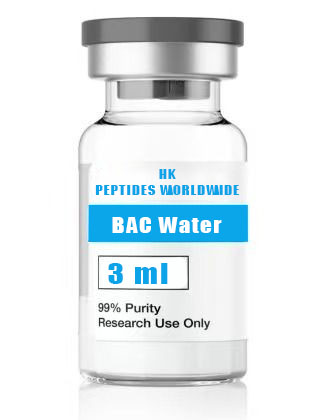
BAC Water 3 mg Research Solution
Original price was: $11.00.$10.00Current price is: $10.00.
Bulk Price for 10 vials.
Bacteriostatic Water 3 mg Research Solution is a sterile, preservative-containing diluent for reconstituting lyophilized research compounds. For laboratory use only. Not for human or veterinary administration.
Bacteriostatic Water 3 mg Research Solution: A Complete Guide
Bacteriostatic Water 3 mg Research Solution is a sterile diluent used in laboratory settings to reconstitute lyophilized peptides and other research compounds. In the United States, it is a research-use-only material, not a product for human injection or clinical use. This guide explains what the solution contains, how researchers typically handle and dilute it, and what to check before you purchase laboratory supplies from any vendor.
Search interest in BAC Water 3 mg reflects steady growth in laboratory research, particularly among scientists working with small lyophilized vials. The content below prioritizes safety, accuracy, and regulatory clarity over promotional claims.
What Bacteriostatic Water 3 mg Research Solution Is
Bacteriostatic water is sterile water that contains a small amount of benzyl alcohol as a bacteriostatic preservative. The preservative slows microbial growth, which makes a multi-dose vial practical for repeated laboratory procedures. The “3 mg” label on this solution generally describes the concentration of the active preservative component in the formulation rather than the water itself.
This product is supplied and discussed strictly for research and laboratory use. It is not a pharmaceutical for human or veterinary administration, and it is not a substitute for sterile water for injection in clinical settings.
BAC Water vs. Sterile Water for Injection
The key distinction is the preservative. Sterile water for injection is preservative-free and intended for single use. Bacteriostatic water contains benzyl alcohol and is designed for procedures where a multi-dose vial reduces waste and contamination risk between draws.
Researchers select between them based on protocol requirements. If a compound or assay is sensitive to benzyl alcohol, preservative-free water is the appropriate choice.
Composition and Concentration
A research-grade bacteriostatic solution typically includes:
- Sterile water as the primary vehicle
- Benzyl alcohol as the bacteriostatic agent
- A stated concentration reflected in the “3 mg” specification
Always confirm the exact composition on the label and the certificate of analysis. Formulations from different suppliers vary, so treat the specification on the vial as the authoritative source.
Why Researchers Use BAC Water 3 mg
Reconstitution is the primary laboratory use. Lyophilized peptides arrive as a dry powder and must be dissolved before analysis. Bacteriostatic water provides a convenient vehicle that limits microbial growth across repeated use.
Practical benefits include:
- Reduced contamination risk in protocols involving multiple draws from one vial
- Cost efficiency compared with single-use preservative-free water
- Consistent vehicle chemistry for repeatable results across experiments
Limitations matter just as much. Benzyl alcohol can interfere with sensitive assays, and some cell cultures or analytical methods require preservative-free solutions. A 3 mg concentration may also make the product unsuitable for certain sensitive applications. Match the vehicle to your protocol before you commit to it.
How to Reconstitute a Lyophilized Peptide
Reconstitution is straightforward, but technique determines whether results hold up.
Prepare the Workspace
Work in a clean, well-lit area. Use gloves, an alcohol swab, and sterile syringes. Wipe the vial stoppers before every draw, and keep the workspace free of clutter.
Add the Solution Slowly
Swirl gently rather than shake. Rapid agitation can damage peptide structure and create foam that makes accurate volume reading difficult. Add the water down the side of the vial where practical and allow the powder to dissolve at room temperature.
Record and Store Properly
Label the vial with the date, concentration, and preparation notes. Refrigerate prepared solutions at 2–8 °C unless the protocol states otherwise. Follow the stability guidance from the manufacturer or your laboratory’s standard operating procedures.
BAC Water Dosage and Dilution in Research Protocols
There is no clinical BAC Water dosage, because the product is not intended for human use. In research settings, the relevant figure is the reconstitution volume, not a dose.
Calculating the Volume
Determine the target concentration by dividing the mass of the lyophilized compound by the volume of diluent added. For example, dissolving a stated mass into a specific volume produces a predictable working concentration. Record these calculations in your laboratory notebook.
Common Reconstitution Volumes
Many protocols use volumes between roughly 1 mL and several milliliters depending on the compound mass and target concentration. Your protocol, not general guidance, governs the volume you should use. Verify calculations independently before proceeding.
Buying BAC Water Online Safely
If you are searching for BAC Water for sale, the vendor matters more than the price. Research chemicals in the U.S. fall outside FDA approval for human use, so buyers carry more responsibility for verifying quality.
Check Before You Order:
- A published certificate of analysis for the specific batch
- Clear labeling that states “research use only”
- Sterility and purity documentation
- Return policies and reported product storage conditions
- Transparent contact information and business details
“BAC Water near me” searches often lead to local distributors and regional suppliers. You can compare these options through the HK Peptides Worldwide product catalog, which hosts research-grade supplies and related documentation. Read every listing carefully and confirm the specification matches your protocol.
Red Flags When Purchasing
Be cautious with vendors who make health claims, publish no analytical documentation, or offer pricing that seems inconsistent with other suppliers. A legitimate research supplier describes the product, not its purported health benefits.
Handling, Storage, and Disposal
Store unopened vials as directed on the label. Keep prepared solutions refrigerated and label them clearly. Dispose of sharps in approved containers and follow your institution’s waste-disposal rules for laboratory chemicals.
HK Peptides and Research-Grade Supply Standards
HK Peptides appears frequently in discussions of research compounds, and buyers often encounter searches like “hk peptides” alongside product research. The most useful approach is to treat any supplier listing as a starting point for verification. Confirm the certificate of analysis, check the specification, and compare storage guidance against your protocol.
Documentation to Request
Ask for batch-specific analytical data, purity results, and storage information. Suppliers who answer documentation requests promptly tend to be more reliable than those who do not. For broader product context, the HK Peptides Worldwide homepage lists available research materials.
Safety and Regulatory Considerations
Bacteriostatic water, including 3 mg research formulations, is intended for laboratory use only. It is not approved for human or veterinary administration, and it should never be introduced into a person. U.S. regulators do not authorize research chemical sales for human consumption, and suppliers typically state this explicitly on packaging.
For authoritative regulatory context, review FDA guidance on research chemicals and NIH laboratory safety information. These resources clarify the difference between research materials and approved medicines.
Laboratory personnel should also follow their institution’s hazardous chemical policies, maintain a chemical inventory, and train staff on safe handling. Benzyl alcohol content can create handling considerations for skin and eye exposure, so review the safety data sheet supplied with the product.
Frequently Asked Questions
What is Bacteriostatic Water 3 mg Research Solution used for?
It is a preservative-containing sterile diluent used to reconstitute lyophilized research compounds in laboratories. It slows microbial growth in multi-dose vials.
What is the difference between BAC Water 3 mg and standard bacteriostatic water?
The specification number describes the formulation’s concentration of the preservative component. Always confirm the exact composition on the label because products differ across suppliers.
Where can I buy BAC Water online?
Research suppliers and specialized distributors in the U.S. sell it as a research-use-only product. Verify the certificate of analysis, labeling, and storage guidance before ordering, especially when comparing prices.
Is there a BAC Water dosage for human use?
No. This product is not intended for human or veterinary use, so there is no clinical dosage. Research protocols refer to reconstitution volumes, not doses.
How should I store BAC Water 3 mg Research Solution?
Store unopened vials per the label instructions, often at controlled room temperature. Refrigerate prepared solutions at 2–8 °C and label them with the preparation date and concentration.
Does benzyl alcohol affect research results?
Yes, in some cases. Benzyl alcohol can interfere with sensitive assays and certain cell cultures. Choose preservative-free water when your protocol requires it.
Be the first to review “BAC Water 3 mg Research Solution”
Related products
Research Grade Peptide
Research Grade Peptide
Research Grade Peptide
Research Grade Peptide
Research Grade Peptide
Research Grade Peptide
Research Grade Peptide
Research Grade Peptide
Reviews
There are no reviews yet.