
Uncategorized
Daily-Use Skincare Peptides (Generally Safe): How to Buy and Use Them Wisely
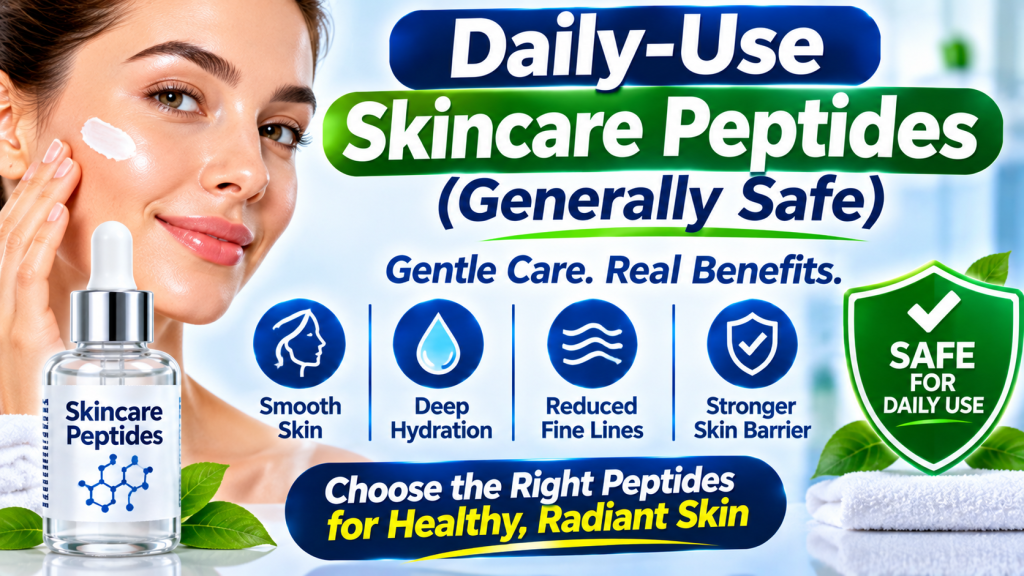
Nov
If you are researching daily-use skincare peptides (generally safe in well-formulated products), you are probably deciding whether to add a peptide serum, cream, or essence to a routine you already use every morning and night. The short answer: peptides used in topical skincare are widely considered safe for regular use, as long as you choose a reputable supplier, follow label directions, and patch-test when introducing a new formula. A growing number of U.S. shoppers now pair a lightweight peptide serum with sunscreen and a gentle cleanser rather than layering a new active every week.
This guide explains what daily-use skincare peptides are, why they are generally safe, how to choose products worth your money, and which usage habits keep results realistic. You will also find sourcing guidance from a supplier like HK Peptides Worldwide and a clear comparison of peptide types so you can buy with confidence instead of guesswork.
What Are Daily-Use Skincare Peptides?
Peptides are short chains of amino acids, the same building blocks that make up proteins such as collagen and elastin in your skin. In skincare, peptides are formulated into serums, moisturizers, eye creams, and essences so the skin can be regularly exposed to these building blocks without the irritation risk of stronger actives. They are not the same as injectable peptides, and topical use follows different rules.
Daily-use peptides are formulas specifically designed to be applied once or twice a day as part of a standard routine. Common categories include signal peptides that support collagen production, carrier peptides that help deliver trace minerals, and neurotransmitter-inhibiting peptides marketed for the appearance of expression lines. You will usually see names like Matrixyl, copper peptides, Argireline, and acetyl hexapeptide-8. No single peptide does everything, so many brands blend several into one serum.
Because topical peptides are applied to the surface of the skin and used in relatively low concentrations, they are best understood as supportive ingredients rather than treatments. They complement sunscreen, hydration, and sleep; they do not replace them.
Why Are Daily-Use Skincare Peptides Generally Safe?
Regulators and formulators treat cosmetic peptides differently from prescription drugs. In the United States, topical skincare products are regulated as cosmetics by the FDA, which means they must be safe under labeled use but are not required to prove efficacy the way drugs are. Peptides used commonly in cosmetics have a long history of topical use, and most reactions reported by users are mild and tied to other ingredients in the formula, such as fragrance, preservatives, or high alcohol content.
Daily use is safe because peptide concentrations in finished products are typically low and the molecules act primarily on the skin surface and upper layers. The main limits are individual sensitivity and product quality, not the peptide concept itself. If a serum stings, burns, or causes redness that persists, the issue may be the carrier formula or an interaction with another active such as a strong acid or retinoid. In those cases, reduce frequency or stop use.
How to Choose a Peptide Product for Everyday Use
Choosing well matters more than choosing often. A thoughtful buying process narrows the field fast and protects your skin barrier at the same time.
Read the Ingredient List and Concentration Clues
Check where peptides appear in the ingredient list. Ingredients are listed in descending order of concentration until the one-percent mark, so peptides appearing near the end may be present only in trace amounts. Look for products that name the peptide and the type of formula clearly, such as a hyaluronic acid peptide serum or a ceramide peptide moisturizer. Be cautious of vague labels that say “peptide complex” without any detail.
Match the Peptide Type to Your Goal
If your concern is the appearance of fine lines, signal peptides and neurotransmitter-inhibiting peptides are the usual choices. If your concern is hydration and barrier support, look for peptides paired with ceramides, glycerin, or panthenol. Copper peptides are popular for skin texture and post-procedure recovery, but they can conflict with strong acids, so space them apart. Match the product to the goal rather than buying the most hyped blend.
Check the Format and Finish
Daily use means the product has to fit your routine. A lightweight serum layers well under sunscreen, while a richer peptide cream suits evening use or dry skin. Fragrance-free and alcohol-free options are safer bets for sensitive skin. Packaging matters too: airless pumps and opaque bottles protect peptides better than open jars, because light and air can degrade some formulas over time.
Buy From a Supplier You Can Verify
For U.S. buyers, storage conditions, shipping speed, and documentation matter as much as price. A supplier with transparent product information, batch details where available, and clear shipping policies is easier to trust than an anonymous marketplace listing. Explore peptide products for skincare routines and compare how formulas are described before you commit.
How to Use Skincare Peptides Daily Without Overdoing It
Simplicity beats stacking. A reliable daily sequence is cleanse, apply peptide serum to slightly damp skin, follow with moisturizer, and finish mornings with broad-spectrum sunscreen. Evening routines can repeat the pattern after a gentle cleanser. Wait a minute between layers if a formula feels tacky, and use a pea-sized amount for the face and neck.
When you add a new peptide, introduce it alone for one to two weeks before adding anything else. Patch-test behind the ear or on the inner forearm if you have sensitive skin. If you use retinoids or exfoliating acids, alternate them with peptide products rather than mixing everything in one layer. Layering too many actives at once is the most common reason people blame peptides for irritation.
Peptide Types Compared
The table below summarizes widely used topical peptides and how they are commonly positioned. This is general product information, not a promise of results for any individual.
| Peptide type | Common example | Typical purpose | Best for |
|---|---|---|---|
| Signal peptides | Matrixyl (palmitoyl pentapeptide) | Support the look of firmness | Fine lines, everyday use |
| Carrier peptides | Copper tripeptide-1 | Help deliver copper; support texture | Mature skin, post-procedure care |
| Neurotransmitter-inhibiting | Argireline (acetyl hexapeptide-8) | Target the appearance of expression lines | Forehead and eye area |
| Barrier-support blends | Peptides with ceramides | Hydration and comfort | Dry or sensitive skin |
Generally, your best first purchase is a fragrance-free signal peptide serum paired with a ceramide moisturizer. Add a second peptide only after you know the first one agrees with your skin.
Benefits and Realistic Expectations
Peptides can improve how skin feels and looks when they are used consistently and supported by sunscreen. Users often report softer texture, better hydration, and a more rested appearance after several weeks. Those are plausible outcomes for a well-formulated product, though individual results vary and no topical peptide erases deep lines or replaces professional treatment.
Set a realistic timeline. Many routines are judged after four to eight weeks, not four days. Keep a simple note of what you use and when you started, so you can tell whether a change is worth repeating. If a product produces no visible change and no comfort benefit after two months, it may be the wrong formula for your skin rather than proof that peptides do not work.
Sourcing and Storage: Practical Tips for U.S. Buyers
Order peptides from suppliers who ship promptly and protect products in transit. Heat and direct sunlight can degrade formulas, so store serums in a cool, dry place and close caps tightly. Check expiration dates and use opened products within the recommended period, often six to twelve months after opening.
Compare product descriptions carefully and look for clear ingredient lists, usage directions, and contact information. Browse the full skincare range to see which formulas match your routine, and confirm shipping timelines before ordering if you are replacing a product you depend on daily. Keep records of batch numbers on the label in case you need to reference a purchase later.
Who Should Be Cautious?
Pregnancy, breastfeeding, and known allergies are reasons to consult a clinician before adding new products. Anyone with eczema, rosacea, or a compromised skin barrier should introduce peptides slowly and avoid formulas with fragrance or drying alcohols. People using prescription retinoids or undergoing dermatologic procedures should ask their provider how to sequence peptide products.
FAQ: Daily-Use Skincare Peptides
Are skincare peptides safe for everyday use?
Topical peptides in cosmetic products are generally safe for daily use when used as directed. Reactions are usually linked to other ingredients, such as fragrance or preservatives. Stop use and consult a clinician if irritation persists.
Can I use peptides with retinol or vitamin C?
Many people do, but the layering matters. Alternate rather than combine strong actives in the same layer, and introduce one new product at a time. Copper peptides, in particular, are often spaced apart from strong acids.
How long until I see results?
Allow four to eight weeks of consistent use before judging a peptide product, and remember that sunscreen and hydration drive much of the visible improvement. Deep lines and laxity are unlikely to change from topical peptides alone.
Do peptides replace sunscreen?
No. Sunscreen remains the most important daily step for protecting skin appearance. Treat peptides as a supportive layer beneath it.
Are more expensive peptides better?
Price does not guarantee a better formula. Concentration, the peptide type, packaging, and the rest of the ingredient list matter more than brand prestige. Compare labels rather than marketing claims.
Can I use multiple peptide products at once?
Yes, but keep it simple. A serum plus a moisturizer is usually enough. Stacking several peptide products increases cost and irritation risk without a clear benefit.
Final Takeaway
Daily-use skincare peptides are a low-risk, routine-friendly way to support skin hydration and appearance, provided you buy from a verifiable supplier, read the label, and introduce products slowly. Choose a formula that matches your goal, pair it with sunscreen, and give it weeks rather than days. For buyers ready to compare options, review the HK Peptides Worldwide product selection and confirm shipping and storage details before ordering.
