
Uncategorized
Tirzepatide Prescription Online: How the Process Works in the U.S.
Nov
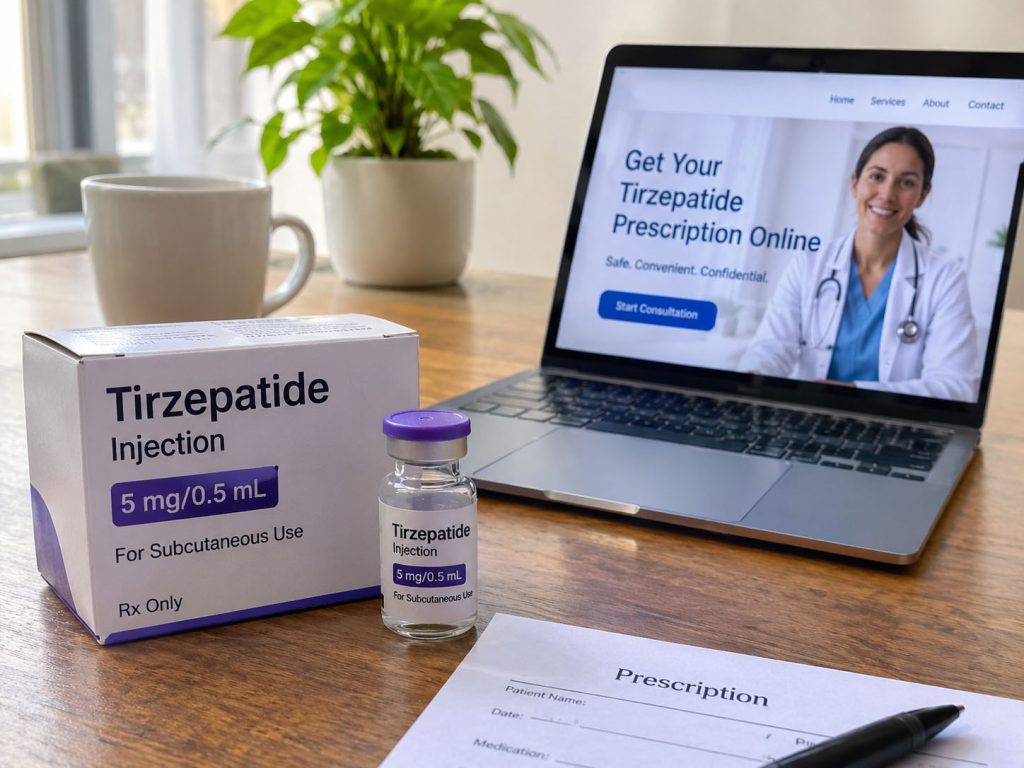
Getting a tirzepatide prescription online means connecting with a licensed U.S. healthcare provider through telehealth, completing a medical evaluation, and—if clinically appropriate—receiving a prescription that is dispensed by a state-licensed pharmacy. The medication itself is not sold directly to consumers; it is a prescription-only drug, so there is no legitimate way to buy it without a provider’s order. That distinction matters, because the online market for weight-management drugs has grown crowded with lookalike products sold as “research chemicals” or “peptides.” Understanding how the legitimate path works—and where the risks sit—helps you make a safer, better-informed decision.
This guide explains who typically qualifies, how telehealth evaluations work, what to expect on pricing and insurance, how to tell a legitimate pharmacy from a questionable seller, and which red flags should stop you from entering payment details.
What Tirzepatide Is and Why It Requires a Prescription
Tirzepatide is the active ingredient in a brand-name medication approved by the U.S. Food and Drug Administration for two separate uses: type 2 diabetes and chronic weight management. It is a dual-action injectable that mimics two gut hormones involved in appetite regulation and blood sugar control, which is why it is often grouped with—but is not the same as—older GLP-1 medications.
Because it affects glucose control, digestion, and appetite, it carries meaningful risks. Common side effects include nausea, vomiting, diarrhea, and constipation, and the label warns about more serious concerns such as pancreatitis, gallbladder problems, and thyroid C-cell tumors observed in animal studies. A clinician needs to review your history before prescribing it, and a legitimate seller will not ship it to you without that review.
That is the single most important rule to carry through this entire article: a genuine tirzepatide prescription requires a licensed prescriber, and no legitimate pharmacy sells it without one.
Who Is a Good Candidate for Online Prescribing?
Telehealth works best for adults who are generally healthy, understand the commitment involved, and are looking for convenience rather than a workaround. The medication is typically considered for adults with a body mass index in the obesity range, or with a BMI in the overweight range alongside at least one weight-related condition such as high blood pressure or elevated cholesterol. Its diabetes indication is separate and depends on a diagnosis and lab work.
Online prescribing is less suitable for people with a personal or family history of certain thyroid cancers, a history of pancreatitis, severe gastrointestinal disease, or who are pregnant or breastfeeding. Some conditions require in-person evaluation, and a responsible telehealth provider will tell you when that applies.
If you are unsure where you fall, start by checking whether an online consultation is right for your situation before you shop around on price. The clinical fit comes first; the logistics come second.
How the Online Prescription Process Works Step by Step
The legitimate path is more structured than most people expect, and that structure is a feature, not a bug. Here is the typical sequence.
Step 1: Intake and Medical Questionnaire
You complete an online health intake covering your medical history, current medications, prior weight-management attempts, and goals. Reputable platforms ask detailed questions and may request recent lab work or records from your primary care provider. Short, one-page questionnaires with no follow-up questions are a warning sign.
Step 2: Review by a Licensed Provider
A licensed clinician—often a nurse practitioner or physician—reviews your information, may message you with follow-up questions, and conducts a video or phone visit when required by state law. This is the step that makes the prescription lawful. It should feel like a real clinical encounter, not a checkout screen.
Step 3: Prescription Sent to a Licensed Pharmacy
If the provider determines the medication is appropriate, they send the prescription electronically to a pharmacy licensed in your state. You may be able to use your own pharmacy, or the platform may route it to a partner pharmacy. Either way, the dispensing entity must hold a valid license where you live.
Step 4: Fulfillment, Counseling, and Follow-Up
The pharmacy dispenses the medication, usually as a multi-dose injectable pen or a vial depending on the product and supply situation. You should receive instructions for use, storage guidance, and a plan for follow-up. Good telehealth services check in on side effects and dose titration rather than going silent after the sale.
An Important Note on Compounded Versions
During periods of shortage, some pharmacies compounded tirzepatide, which created confusion about legality and quality. The regulatory status of compounded versions has shifted over time and depends on current FDA determinations and individual pharmacy licensing. Rather than relying on outdated information, verify the current status directly with the FDA and confirm that any dispensing pharmacy is licensed in your state.
What to Expect on Cost, Insurance, and Availability
Pricing for tirzepatide is one of the most common sources of frustration and misinformation online. Brand-name versions are expensive without coverage, and many insurance plans impose prior authorization, step therapy, or BMI thresholds before approving weight-management indications. Coverage varies widely by plan and employer, so the reliable move is to call your insurer and ask specifically about the drug name, the indication, and prior authorization requirements.
Telehealth platforms may quote a monthly fee that bundles the consultation, messaging, and medication, or they may separate the provider visit from the pharmacy cost. Ask directly what is included, what happens if your dose changes, and whether there are cancellation or subscription terms.
Watch for these cost-related pitfalls:
- Prices that seem dramatically below market for a brand-name product, which often signal a lookalike substance rather than the real medication.
- “No prescription needed” claims, which are incompatible with U.S. law for this drug.
- Unclear sourcing, where the seller will not name the pharmacy or confirm its license.
- Pressure tactics such as countdown timers or limited-time discounts on prescription drugs.
If affordability is the main obstacle, ask the prescriber about manufacturer savings programs, patient assistance options, or alternative treatments. Those are legitimate conversations to have with a clinician.
How to Vet an Online Provider and Pharmacy
A few checks separate credible services from risky ones, and they take only a few minutes.
Verify licensure. The provider must be licensed in the state where you live, and the pharmacy must be licensed in your state. Many state boards of pharmacy offer public license lookups.
Look for a real clinical review. The service should collect meaningful history, offer direct communication with a provider, and decline to prescribe when the medication is not appropriate. A service that prescribes to everyone who pays is not practicing medicine.
Check privacy and payment practices. Look for a clear privacy policy and standard payment processing. Be cautious with sellers who request payment through peer-to-peer apps, cryptocurrency, or wire transfers, which offer little recourse if something goes wrong.
Confirm what you are actually receiving. Ask whether the product is FDA-approved brand-name tirzepatide, and request the pharmacy name before paying. If a seller describes the product as “for research use only,” it is not a prescription medication and is not intended for human use.
Read the fine print on refills and support. You want a clear path for dose adjustments, side-effect questions, and refills. Continuity of care matters with a medication that is titrated over weeks.
Red Flags That Should Stop You
Some warning signs are unambiguous. Treat any of the following as a reason to walk away:
- Claims that no prescription or medical review is required.
- Products marketed as “research peptides,” “lab-grade,” or “not for human consumption” while implying you should inject them.
- No named pharmacy, no license information, and no physical business address.
- Testimonials presented as medical evidence, or promises of specific weight-loss results.
- Requests for sensitive data like your Social Security number when it is not needed for care.
- Aggressive upselling of additional injectables, supplements, or “stacks” in the same transaction.
Unregulated injectable products carry real risks: incorrect dosing, contamination, unknown purity, and improper storage. The appeal of a lower price does not offset those hazards.
Safety, Side Effects, and Ongoing Monitoring
Tirzepatide is titrated gradually to reduce gastrointestinal side effects, and that schedule should be followed as prescribed rather than accelerated for faster results. Stay hydrated, eat slowly, and report persistent vomiting, severe abdominal pain, or signs of dehydration to your provider promptly.
Because the medication can affect blood sugar, people with diabetes need guidance on monitoring and on adjusting other glucose-lowering drugs. Anyone undergoing surgery or needing anesthesia should inform the care team about the medication. Long-term use typically includes periodic review of progress, side effects, and whether continuing is appropriate.
If you are exploring related compounds and want background on how peptides are sourced and handled, our overview of peptide research and quality considerations is a useful starting reference point for understanding the terminology you will encounter.
Quick Answers to Common Questions
Can I get tirzepatide prescribed online without seeing a doctor in person?
In many cases, yes—telehealth providers can prescribe after a thorough evaluation, and some states permit care without an in-person visit. Requirements vary by state, and the provider must be licensed where you live.
Is it legal to buy tirzepatide online in the United States?
It is legal to obtain it through a prescription issued by a licensed provider and dispensed by a licensed pharmacy. Buying it without a prescription, or purchasing “research” versions intended for laboratory use, is not a legitimate path to treatment.
How long does the online process take?
Timelines vary by platform and state. Some services complete intake and review within a day or two, while others require lab work or a scheduled video visit that adds time. Ask about turnaround before you commit.
Will my insurance cover a telehealth prescription?
Coverage depends on your plan, the indication, and prior authorization rules. Telehealth prescribing itself does not determine coverage; the medication and diagnosis do. Confirm with your insurer directly.
What is the difference between tirzepatide and semaglutide?
Both are injectable medications used for diabetes and weight management, but they are different molecules with different trial data, dosing schedules, and labeling. A clinician can help determine which is appropriate for you.
Can I switch from another weight-management medication?
Possibly, but switching requires clinical guidance because dosing and titration differ between products. Do not overlap or restart medications without direction from your prescriber.
Making a Confident Decision
The safest approach to obtaining tirzepatide online is also the simplest: choose a service that behaves like a real medical practice. Look for licensed clinicians, state-licensed pharmacies, transparent pricing, and genuine follow-up care. Verify claims independently, ask where the medication comes from, and be skeptical of any offer that removes the prescriber from the equation.
If you want to understand the broader landscape of injectable and peptide-based products—including how sourcing and labeling claims are described—you can explore the product range and descriptions with a clearer sense of which questions to ask. Combine that with a conversation with a licensed provider, and you give yourself the best chance of a safe, well-monitored treatment experience rather than an expensive gamble.
