
Uncategorized
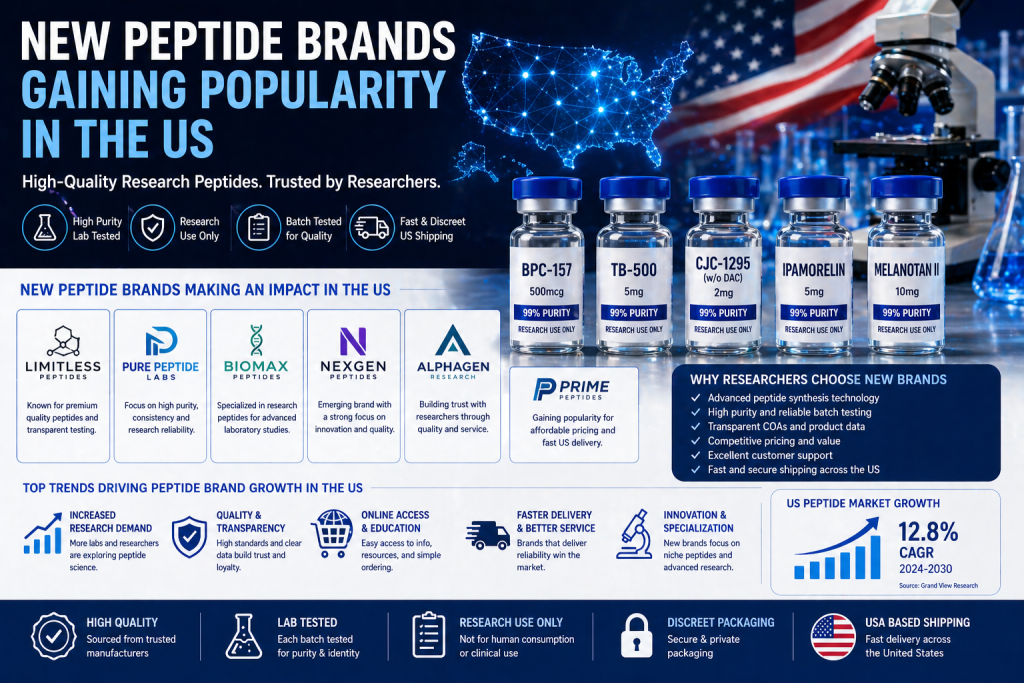
New Peptide Brands Gaining Popularity in the US: Trends, Quality, and What Researchers Should Know
May
Introduction: The Rising Demand for Peptide Brands in the US
The United States continues to be one of the largest and most influential markets for peptide research. As scientific interest in peptides grows, so does the demand for reliable suppliers and high-quality research products. In 2026, researchers are not only looking for peptides they are also paying close attention to the brands behind them.
New peptide brands are entering the US market at a rapid pace, offering a wide range of products designed for laboratory use. At the same time, established suppliers are expanding their reach and improving their quality standards to remain competitive.
This shift has created a dynamic and evolving market where quality, transparency, and reliability play a crucial role. In this article, we explore the rise of new peptide brands in the US, what makes them popular, and how researchers evaluate suppliers in today’s competitive landscape.
Understanding the US Peptide Market
Why the US Market Is Growing
The US peptide market is expanding due to several factors:
- Increased investment in biotechnology research
- Growing interest in molecular and cellular studies
- Advances in peptide synthesis technology
- Strong academic and private research sectors
These factors have created a high demand for hk peptides, encouraging new brands to enter the market.
What Researchers Look for in Peptide Brands
Researchers are becoming more selective when choosing peptide suppliers. Key factors influencing their decisions include:
- Product purity and quality
- Consistency across batches
- Availability of analytical data
- Transparent sourcing and manufacturing
- Reliable delivery and customer support
Brands that meet these expectations are more likely to gain popularity.
Characteristics of Popular Emerging Peptide Brands
Focus on Quality and Purity
One of the most important factors driving brand popularity is quality. New peptide brands that invest in high-purity synthesis and strict quality control processes tend to gain trust more quickly.
Analytical verification methods such as HPLC and mass spectrometry are now considered standard among reputable suppliers.
Transparent Product Information
Modern researchers expect clear and detailed product information. Brands that provide:
- Certificates of analysis (COA)
- Purity percentages
- Batch details
- Storage guidelines
are more likely to stand out in the market.
Strong Online Presence
In today’s digital environment, a professional and informative online presence plays a major role in brand growth. Websites that offer clear product listings, educational content, and easy navigation help build credibility.
Efficient Logistics and Delivery
Fast and reliable delivery is especially important in the US market. Brands that can ensure quick shipping and secure packaging gain a competitive advantage.
Types of Peptide Brands Gaining Attention
Research-Focused Suppliers
Some newer brands are gaining popularity by focusing on niche areas such as:
- Anti-aging research peptides
- Muscle and recovery research compounds
- Cellular signaling studies
Specialization allows these brands to target specific research communities.
Global Brands Expanding into the US
International peptide suppliers are increasingly entering the US market. These companies often bring advanced synthesis technologies and competitive pricing, making them attractive to researchers.
Key Trends Driving Brand Popularity in 2026
Increased Demand for High-Purity Peptides
Researchers are prioritizing purity more than ever before. Brands that can consistently deliver high-quality peptides are gaining strong reputations.
Growth of Educational Content
Peptide brands are investing in educational content such as blog posts, guides, and research insights. This helps build trust and positions them as knowledge leaders.
Integration of Technology
Modern peptide companies are using technology to improve:
- Order processing
- Quality tracking
- Customer communication
Digital tools help streamline operations and improve customer experience.
How to Evaluate a Peptide Brand
Check for Analytical Testing
Always look for brands that provide analytical verification such as HPLC and mass spectrometry data. This ensures product quality and reliability.
Review Transparency
Brands that openly share information about their products and processes are generally more trustworthy.
Assess Customer Experience
Reliable communication, clear policies, and efficient delivery are signs of a professional supplier.
Look for Consistency
Consistency across batches is critical for research. Established quality control systems help maintain this consistency.
Challenges in the Growing Peptide Market
Market Saturation
As more brands enter the market, it becomes harder for researchers to identify reliable suppliers. This increases the importance of quality and transparency.
Variability in Standards
Not all brands follow the same production and testing standards. Researchers must carefully evaluate suppliers to ensure reliability.
The Future of Peptide Brands in the US
Continued Market Expansion
The peptide market in the US is expected to continue growing as research demand increases. New brands will continue to emerge, bringing innovation and competition.
Higher Expectations from Researchers
As the market matures, researchers will demand higher standards in quality, transparency, and service. Brands that fail to meet these expectations may struggle to compete.
Focus on Long-Term Trust
Successful brands will focus on building long-term relationships with customers by maintaining consistent quality and reliable service.
Why Brand Selection Matters in Research
Choosing the right peptide supplier is essential for achieving accurate and reproducible results. High-quality peptides reduce variability and improve the reliability of experiments.
Researchers who invest time in selecting trusted brands are more likely to achieve consistent outcomes and advance their work effectively.
Frequently Asked Questions (FAQ)
Why are new peptide brands emerging in the US?
The growing demand for research peptides and advancements in biotechnology have created opportunities for new suppliers.
What makes a peptide brand popular?
Quality, transparency, reliable delivery, and strong customer support are key factors.
How can researchers verify peptide quality?
By reviewing analytical data such as HPLC and mass spectrometry results.
Are international peptide brands available in the US?
Yes, many global suppliers are expanding into the US market.
What should researchers look for in a supplier?
High purity, consistent quality, clear documentation, and reliable service.
