
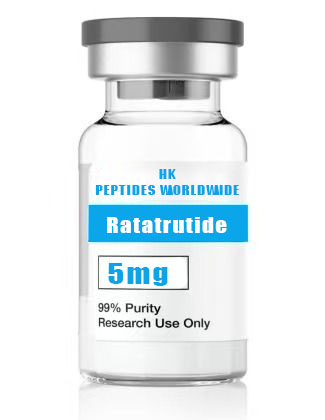
Retatrutide 5 mg Scientific Research Materials
Original price was: $105.00.$91.00Current price is: $91.00.
Bulk Price for 10 Vials.
Retatrutide 5 mg is an investigational synthetic peptide used in scientific research involving GLP-1, GIP, and glucagon receptor interactions. It is studied in laboratory settings to explore metabolic pathways, receptor activity, and molecular signaling.
Retatrutide 5 mg Scientific Research Materials: A Researcher’s Guide to Sourcing and Handling
Retatrutide 5 mg scientific research materials are laboratory-grade study compounds supplied for controlled, non-clinical investigation of a triple-receptor agonist. Researchers exploring metabolic signaling often source these materials to examine how a single molecule interacts with GLP-1, GIP, and glucagon receptors in preclinical models. This guide explains what the 5 mg format contains, how it is handled, what the research literature actually reports, and how to evaluate suppliers in the United States. It is written for laboratory professionals and academic investigators, not for consumers seeking medical treatment.
Retatrutide is an investigational agent and is not an approved drug. Nothing here constitutes medical advice, a dosing protocol, or a recommendation for human use.
What Are Retatrutide 5 mg Scientific Research Materials?
Retatrutide (sometimes written as LY3437943) is a synthetic triple agonist peptide designed to engage three metabolic receptors simultaneously. The 5 mg research format refers to a single vial containing 5 milligrams of lyophilized (freeze-dried) peptide, typically sealed under inert gas and shipped with a specification sheet listing identity, purity, and storage conditions.
This format suits pilot studies, assay calibration, and small-scale receptor-binding experiments where a larger batch would be wasteful. Most suppliers describe purity by high-performance liquid chromatography (HPLC) and confirm molecular identity by mass spectrometry. Reviewing those two documents is the fastest way to judge whether a vial is what its label claims.
Why the 5 mg Format Appeals to Bench Researchers
Small vials reduce waste and limit repeated freeze-thaw cycles, which degrade peptides over time. A 5 mg quantity is also practical for concentration-curve work, since you can prepare several working dilutions without opening a bulk container. For labs new to a compound, it lowers the cost of entry while still allowing meaningful replication.
Who Uses These Materials
The realistic audience includes academic pharmacology groups, contract research organizations running metabolic assays, and independent labs studying incretin biology. These users generally have institutional protocols for documentation and disposal. Hobbyists and home users fall outside the intended audience, and reputable suppliers say so plainly.
Retatrutide Mechanism and Research Context
Retatrutide belongs to the incretin-based class of investigational peptides that includes semaglutide and tirzepatide, though its receptor profile is broader. Peer-reviewed Phase 1 and Phase 2 data published in journals indexed by the U.S. National Library of Medicine describe the compound’s pharmacokinetics and metabolic effects in trial participants. Researchers routinely consult PubMed for primary literature before designing any in vitro work.
Understanding the receptor triad matters for experimental design. A GLP-1 component influences appetite signaling; a GIP component modulates incretin response; a glucagon component affects energy expenditure pathways. Studying all three in one molecule creates opportunities for comparative assays that single-agonist compounds cannot support.
Preclinical Findings Worth Knowing
Published preclinical and early clinical work has focused on weight-related endpoints and metabolic markers. Researchers should rely on primary sources rather than supplier marketing, since secondary summaries often overstate findings. The FDA’s guidance on investigational compounds provides a useful frame for how unapproved agents are regulated in research settings.
What Research Materials Cannot Tell You
A vial of peptide is not a study. Reproducibility depends on assay design, controls, statistical power, and documentation. Researchers should treat supplier claims as a starting point for verification, not as evidence of efficacy.
Handling, Storage, and Reconstitution Basics
Lyophilized peptide is stable for extended periods when kept cold, dry, and protected from light. Most specification sheets call for storage at -20°C or colder for long-term holding, with shorter stability at refrigerated temperatures. Let vials equilibrate to room temperature before opening to prevent condensation from degrading the powder.
Reconstitution in the Lab
If a protocol requires a working solution, use the diluent specified by your supplier, typically bacteriostatic or sterile water for laboratory use. Add liquid slowly down the vial wall rather than directly onto the powder, then swirl gently; shaking can denature peptides. Record the concentration and preparation date on the vial.
Documentation and Chain of Custody
Log receipt date, lot number, and storage location for every vial. Chain-of-custody records protect study integrity and satisfy institutional audit requirements. If your facility requires material transfer agreements, confirm them before ordering.
How to Evaluate a Retatrutide Supplier in the United States
Researchers searching for Retatrutide near me usually want a domestic supplier with verifiable documentation and predictable shipping. Quality signals matter more than price. Look for a certificate of analysis dated to the specific lot, not a generic sample document.
Documentation Checklist
Require HPLC purity data, mass spectrometry confirmation, and a clear statement of the storage and handling conditions. Ask whether third-party testing is performed and whether reports are traceable to your vial’s lot number. Suppliers that answer these questions directly tend to operate more transparently.
HK Peptides Worldwide publishes lot-level specifications for its research catalog and ships within the United States. Labs comparing suppliers can review the company’s research peptide standards before committing to a purchase. Reputable suppliers will always state that products are for research use only.
Red Flags to Avoid
Be cautious with vendors who describe human dosing, promise therapeutic outcomes, or omit purity data entirely. These signals suggest a seller targeting consumers rather than laboratories, which creates both compliance and quality risk. For regulatory context on unapproved products, see the FDA’s consumer information on fraudulent medical products.
Retatrutide Dosage: What the Research Literature Actually Reports
Researchers frequently search for Retatrutide dosage, but the honest answer is that published trial protocols describe investigational regimens given under clinical supervision, not consumer dosing instructions. Those regimens were designed for controlled trials with monitoring, and they do not translate into laboratory handling guidance.
For lab work, concentration decisions belong to your experimental design and institutional review, not to a supplier page. A supplier that publishes human dosing schedules is signaling that it sells to consumers, which should raise concerns about its quality controls.
Reading Trial Data Responsibly
When reviewing published trials, note the study population, duration, and endpoints before drawing conclusions. Early-phase trials often involve small samples and are not powered to establish broad safety profiles. The ClinicalTrials.gov registry maintained by the U.S. National Institutes of Health lists registered studies and their status.
Questions Your Protocol Should Answer
Before ordering, define your assay’s concentration range, your controls, and your disposal method. If those answers are unclear, the compound is not the bottleneck; the study design is.
Buying Retatrutide Online: Practical Guidance
People who buy Retatrutide online for laboratory use should prioritize documentation over discounts. Request the lot-specific certificate of analysis before payment, confirm shipping conditions (cold packs where required), and verify the seller’s return and replacement policy for damaged shipments.
Expect domestic delivery timelines of a few business days from U.S.-based suppliers, though this varies. International shipments may face customs delays and temperature excursions that compromise peptide integrity, so domestic sourcing is often the lower-risk choice for temperature-sensitive materials.
When comparing where to buy Retatrutide for research, ask three questions: Is the lot traceable? Is purity independently verified? Does the seller restrict sales to research use? A supplier that answers all three clearly belongs on your shortlist. Labs building a broader metabolic research inventory can browse the full HK Peptides Worldwide catalog alongside these single-vial options.
Frequently Asked Questions
Is Retatrutide 5 mg approved for human use? No. Retatrutide remains an investigational compound and is not approved by the FDA for any indication. The 5 mg format is sold strictly as a research material.
What purity should I expect from research-grade Retatrutide? Most research suppliers report HPLC purity in the high 90s percentage range. Always confirm the figure on the lot-specific certificate of analysis rather than a generic product page.
How should I store a 5 mg vial? Store lyophilized peptide frozen, dry, and protected from light. Follow the specific storage instructions on your supplier’s specification sheet and avoid repeated temperature cycling.
Can I find a Retatrutide supplier near me in the US? Domestic U.S. suppliers ship within days and avoid customs risk. Search for vendors that publish lot-level testing documents and clearly label products for research use only.
Does a certificate of analysis guarantee quality? It is strong evidence when traceable to your lot, but it is not a guarantee. Pair documentation review with your own identity and purity checks where your protocol allows.
Where can I read primary research on Retatrutide? Peer-reviewed trials are indexed on PubMed, and registered studies appear on ClinicalTrials.gov. Rely on those sources rather than supplier summaries.
Key Takeaways
Retatrutide 5 mg scientific research materials serve laboratory investigation of a triple-receptor agonist, and the 5 mg vial suits pilot work and assay calibration. Quality depends on lot-specific documentation, correct cold storage, and careful handling. Researchers should source from suppliers who publish testing data, restrict sales to research use, and avoid any vendor promoting human dosing. Treat published literature as your evidence base and supplier claims as a starting point for verification.
Be the first to review “Retatrutide 5 mg Scientific Research Materials”
Related products
Research Grade Peptide
Research Grade Peptide
Research Grade Peptide
Research Grade Peptide
Research Grade Peptide

Research Grade Peptide

Research Grade Peptide
Research Grade Peptide
Reviews
There are no reviews yet.