
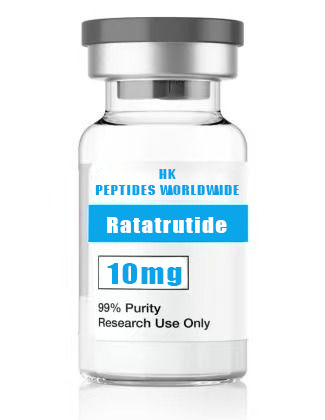
Retatrutide 10 mg Scientific Research Materials
Original price was: $149.00.$130.00Current price is: $130.00.
Bulk Price for 10 Vials.
Retatrutide 10 mg lyophilized research peptide in a single vial, supplied with batch-specific documentation for laboratory use only. Not for human consumption. Confirm COA, purity, and cold-chain shipping details with the supplier before ordering.
Retatrutide 10 mg Scientific Research Materials: A Guide for Laboratory Professionals
Retatrutide 10 mg scientific research materials are laboratory-grade compounds supplied to qualified researchers studying multi-receptor metabolic signaling. This guide explains what the material is, how it is typically handled in research settings, and what buyers in the United States should verify before ordering. It is written for laboratory scientists, academic researchers, and procurement specialists rather than for general consumers.
Retatrutide is an investigational triple agonist that acts on GIP, GLP-1, and glucagon receptors. As of this writing, it remains under clinical investigation and is not an approved therapeutic product. Researchers obtain it as a lyophilized powder for in vitro and preclinical work. Suppliers such as HK Peptides Worldwide list it among their research compounds, and this article explains how to evaluate such listings responsibly.
What Are Retatrutide 10 mg Scientific Research Materials?
These materials are vials containing 10 milligrams of lyophilized Retatrutide powder intended strictly for laboratory investigation. The lyophilized form improves stability during shipping and storage, and researchers reconstitute it with an appropriate solvent immediately before use. Each vial is typically accompanied by a certificate of analysis (COA) describing identity, purity, and testing methods.
The 10 mg size suits pilot studies, assay development, and small-scale comparative work where a larger vial would risk waste or degradation. Laboratories often prefer it when they need to run several concentrations without committing to bulk quantities.
How the Compound Works in Research Contexts
Retatrutide is studied as a unimolecular peptide that engages three receptors simultaneously. GIP and GLP-1 receptor activity influence incretin signaling, while glucagon receptor activity affects energy expenditure pathways. Researchers use it to explore how combined receptor engagement differs from single- or dual-agonist approaches.
These are mechanistic research questions, not established clinical outcomes. Any discussion of efficacy belongs to published trial literature, not to product listings.
Physical Form and Handling Considerations
Lyophilized peptide powders are hygroscopic and sensitive to light, heat, and repeated freeze-thaw cycles. Laboratories typically store vials at low temperature, protect them from direct light, and reconstitute only the quantity needed for a given experiment. Aseptic technique matters because contamination can invalidate results long before it becomes visible.
Who Uses These Research Materials?
The core audience is straightforward: academic metabolism laboratories, contract research organizations, and independent investigators working on peptide pharmacology. Procurement staff at these organizations also need plain-language guidance because they must confirm documentation, shipping terms, and compliance before releasing funds.
This is not a consumer supplement category. Buyers should be able to describe their research context and institutional oversight, and reputable suppliers increasingly ask for that confirmation.
Key Specifications Researchers Should Check
A product page should answer basic technical questions without requiring a support ticket. The table below summarizes the specifications that matter most when comparing Retatrutide 10 mg listings.
| Specification | What to Look For |
|---|---|
| Quantity per vial | 10 mg of Retatrutide, clearly stated |
| Form | Lyophilized powder |
| Purity | Third-party HPLC result, typically reported as a percentage |
| Identity confirmation | Mass spectrometry data matching expected molecular weight |
| Documentation | COA with batch number and test dates |
| Storage guidance | Temperature range and light-protection instructions |
| Shipping | Cold-chain or insulated packaging where appropriate |
If a listing omits purity data, test methods, or batch traceability, that gap is itself useful information. Documentation quality separates serious research suppliers from resellers who simply repackage vials.
Retatrutide Dosage: What the Research Literature Actually Covers
Researchers searching for “Retatrutide dosage” usually want dosing schedules from published trials rather than instructions for personal use. Those are different questions, and mixing them up creates risk.
Dose-ranging information appears in peer-reviewed clinical trial reports, which describe escalating schedules under protocol supervision. Those figures are study parameters, not guidance for laboratory handling or self-administration. For laboratory work, “dose” refers to the concentration applied to a cell system or animal model, and it must be justified by the study design and institutional approvals.
A responsible supplier does not publish human dosing instructions for an investigational compound. If a listing offers such guidance, treat it as a red flag rather than a convenience.
Where to Buy Retatrutide Online: A Buyer’s Checklist
People searching “where to buy Retatrutide” or “buy Retatrutide online” are usually trying to separate credible vendors from thin storefronts. A short checklist resolves most of the uncertainty.
- Documentation first. Request the COA for the specific batch before ordering, not a generic sample.
- Independent testing. Confirm that purity and identity results come from a third-party laboratory.
- Clear labeling. The vial label should state compound name, quantity, and batch number.
- Shipping transparency. Ask how the product is packed and what happens if a shipment is delayed.
- Communication quality. Technical questions should get technical answers, not pressure to purchase.
- Compliance posture. The supplier should state clearly that products are for research use only.
Researchers who search “Retatrutide near me” are often looking for domestic shipping rather than a physical storefront. Confirm the fulfillment location and expected transit time so that cold-chain or insulated packaging still performs as intended. Reviewing the supplier’s research peptide catalog and published policies before checkout is a reasonable final step.
Retatrutide for Sale Listings: Reading Between the Lines
Listings offering “Retatrutide for sale” vary enormously in quality. Some include full analytical documentation, lot traceability, and clear research-use-only labeling. Others show a stock photo, a price, and little else.
Price alone is a weak signal. A low price may reflect bulk sourcing or it may reflect minimal testing. The more reliable approach is to compare documentation depth across vendors and to ask the same three questions of each: What is the tested purity? Which laboratory performed the analysis? What is the batch number on the vial I will receive?
HK Peptides and the Research Supply Chain
Many buyers encounter the shorthand “hk peptides” while comparing suppliers. It refers to Hong Kong-based peptide distributors, a common sourcing origin for research compounds. Location is not a quality indicator by itself; testing practices and documentation standards are.
When evaluating any supplier in this category, look for a published testing protocol, batch-specific COAs, and consistent labeling. The quality and testing standards a supplier publishes tell you more about reliability than any single marketing claim. Researchers should also confirm that importing the material complies with applicable U.S. regulations and their institution’s policies.
Handling, Storage, and Documentation Best Practices
Good laboratory practice begins before reconstitution. Keep vials sealed until needed, store them according to the supplier’s stated conditions, and log receipt dates and batch numbers in your inventory system.
When reconstituting, use appropriate technique and record the solvent, concentration, and date. Aliquot if the material will be used across multiple sessions to avoid repeated freeze-thaw cycles. Retain the COA alongside experimental records so that results remain traceable if a batch is later questioned.
Documentation is not administrative overhead. In reproducibility-focused research, it is part of the experiment.
Limitations and Responsible Use
Retatrutide remains investigational, and the research material is not a finished pharmaceutical. Purity testing confirms identity and cleanliness of the powder; it does not establish safety or efficacy in humans. Researchers should treat all peptide materials as potentially hazardous and follow institutional safety protocols.
Regulatory status also matters. Researchers in the United States should verify current rules with the relevant federal agency before purchasing, and institutional review requirements apply to any work involving human subjects or animal models. This article provides product information, not legal advice.
Frequently Asked Questions
What is Retatrutide 10 mg used for in research?
It is used to study simultaneous GIP, GLP-1, and glucagon receptor activity in cellular and preclinical models. Researchers compare it against single- and dual-agonist compounds to understand metabolic signaling differences.
Is Retatrutide approved for human use?
No. It remains an investigational compound, and research-grade material is supplied for laboratory use only. Any human use claims should be treated with suspicion.
How should lyophilized Retatrutide powder be stored?
Store it cold and protected from light, following the supplier’s stated temperature range. Avoid repeated temperature swings and reconstitute only what an experiment requires.
What documentation should accompany a purchase?
A batch-specific certificate of analysis with purity results, identity confirmation, and test dates, plus clear research-use-only labeling on the vial and packaging.
Can I find a local supplier by searching “Retatrutide near me”?
Local search results usually reflect domestic shipping rather than physical retail locations. Confirm fulfillment origin, packaging, and transit time before ordering.
Does a higher price guarantee better quality?
No. Compare documentation, third-party testing, and labeling consistency instead. Those factors predict reliability far better than price.
Be the first to review “Retatrutide 10 mg Scientific Research Materials”
Related products
Research Grade Peptide
Research Grade Peptide
Research Grade Peptide
Research Grade Peptide
Research Grade Peptide
Research Grade Peptide

Research Grade Peptide
Research Grade Peptide
Reviews
There are no reviews yet.