
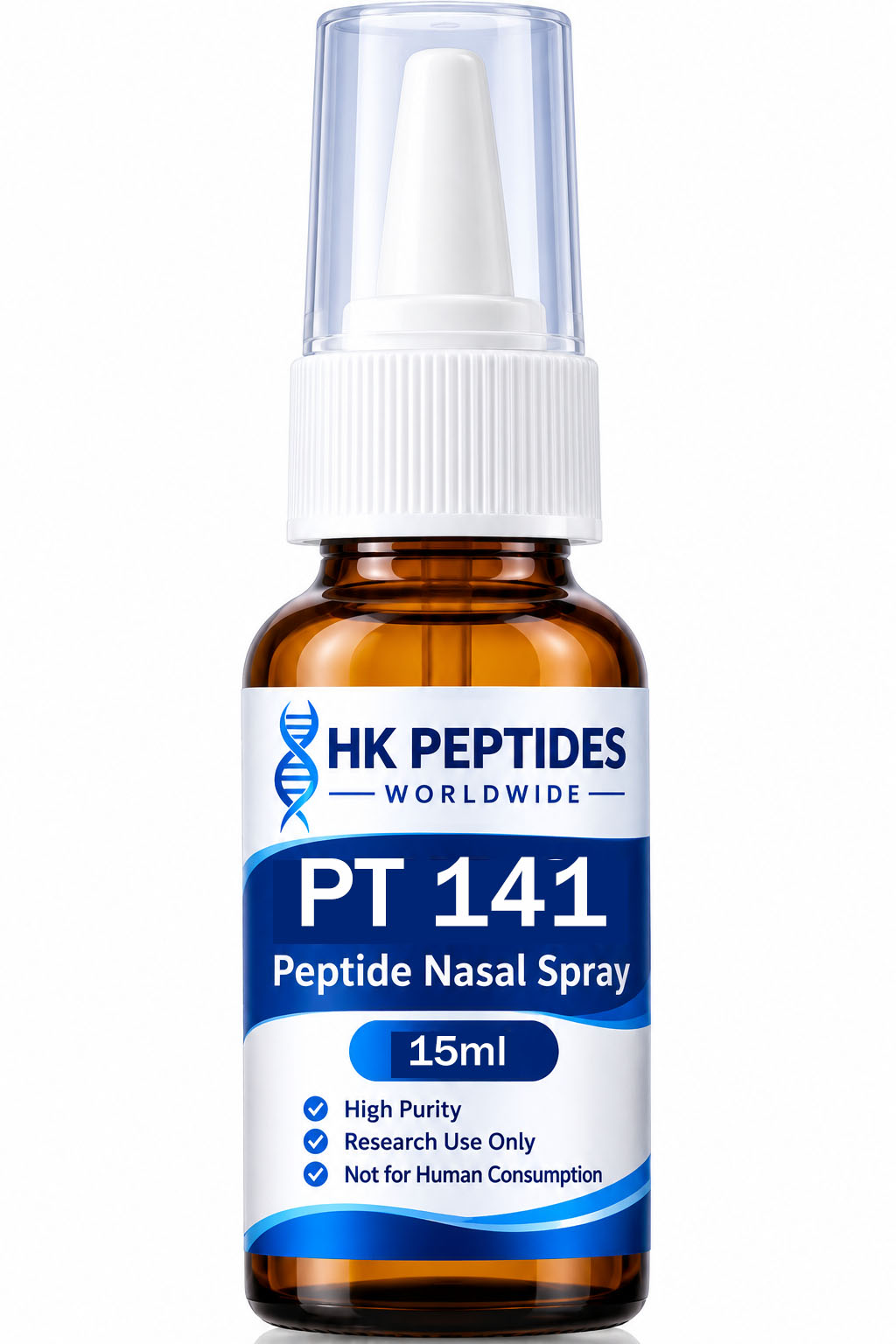
PT 141 15ml
Price range: $38.99 through $209.99
Bulk Price for 2, 5 and 10+ Vails,
A clear glass 15ml vial with a silver crimp cap and septum, labeled “PT-141 15ml For Research Use Only” with lot number and peptide mass, standing upright on a clean white surface beside its printed certificate of analysis and a pair of nitrile gloves, lit with soft neutral studio light and a shallow depth of field.
PT 141 15ml: What This Peptide Is, How It’s Supplied, and What Buyers Should Know
PT 141 15ml refers to a 15-milliliter vial of the research peptide bremelanotide, commonly sold in the United States to laboratory buyers for non-clinical study. This guide explains what the compound is, how a 15ml presentation differs from smaller vials, what a certificate of analysis should tell you, and how to evaluate a supplier before you place an order through a shop like HK Peptides Worldwide.
Quick Answer: What Is PT 141 15ml?
PT 141 is the research code for bremelanotide, a synthetic peptide analog of the hormone alpha-MSH. It is studied in laboratory settings rather than sold as a consumer health product. A 15ml vial is a bulk-format presentation typically offered to research buyers who need multiple test runs from a single lot.
Because this keyword is informational, most searchers want to understand the product, its documentation, and the buying process. The details below cover each of those points in plain language.
Understanding the PT 141 Peptide
The PT 141 peptide belongs to the melanocortin family. It acts on melanocortin receptors, particularly MC4R, which is why it appears in published research on pigmentation, energy balance, and related pathways. The compound is a cyclic peptide, and its structure is what distinguishes it from simpler linear peptides sold in the same market.
How Bremelanotide Differs From Other Research Peptides
Researchers often compare bremelanotide with other melanocortin analogs such as melanotan II. The key difference lies in the receptor binding profile and the stability of the molecule. A supplier should be able to state the exact sequence, molecular weight, and purity of the lot you receive.
Who Typically Uses a 15ml Presentation
Larger vial sizes generally suit buyers running repeat assays, stability testing, or multi-arm study designs. If you only need a single test run, a smaller vial may be more economical. If you need consistency across several weeks of work, the 15ml format reduces the number of lots you have to track.
What to Expect From a PT 141 Peptide for Sale Listing
A credible PT 141 peptide for sale listing should contain more than a price and a photo. Treat the following elements as a checklist. If a listing is missing most of them, that is a signal worth noting.
Certificate of Analysis and Purity
Ask for a batch-specific certificate of analysis (COA). It should show the lot number, test date, analytical method, and a purity figure. High-performance liquid chromatography (HPLC) and mass spectrometry are the standard methods. A COA that is generic, undated, or reused across every product tells you very little.
Storage and Handling Notes
Most research peptides are shipped lyophilized and require cold storage to preserve integrity. Look for clear instructions on reconstitution, storage temperature, and light protection. Suppliers who skip this information are usually not investing in product quality.
Packaging and Labeling
Labels should identify the compound, quantity, lot number, and a research-use-only disclaimer. Proper labeling matters for traceability in a lab notebook as much as for compliance.
Comparing Vial Sizes Before You Buy PT 141 15ml
Buyers weighing whether to buy PT 141 15ml versus a smaller vial should think about total lot consumption, not just unit price.
| Vial Size | Typical Use Case | Trade-Off |
|---|---|---|
| Small vial | Single assay or pilot run | Lower upfront cost, more lots over time |
| 15ml vial | Multi-run studies, consistency work | Higher upfront cost, fewer lot transitions |
Cost per unit usually drops at larger volumes, though suppliers often do not publish exact figures. Request a current quote rather than relying on older listings.
How to Choose a Peptides Supply USA Source
The peptides supply USA market includes importers, resellers, and laboratories with in-house testing. Quality varies widely, so verification should come before price comparison.
Look for Verifiable Testing Records
Independent third-party testing is more persuasive than in-house claims. Where possible, confirm the testing laboratory and the method used. Keep the COA on file alongside your lot records.
Check Transparency About Sourcing and Format
A serious peptide supplier states clearly whether products are manufactured domestically or imported, and how the material is packaged and shipped. Vague answers on sourcing usually precede vague answers on everything else.
Review Communication and Order Support
Fast, specific responses to technical questions are a good sign. Ask about lot availability, documentation turnaround, and what happens if a shipment arrives damaged. The quality of pre-sale support often predicts the quality of after-sale support.
Searching for a PT 141 Peptide Near Me
Local search intent is common in this category, but geography rarely matters for research peptides. Shipping, documentation, and cold-chain handling matter more than physical proximity.
When you search for a PT 141 peptide near me, you are usually looking for a supplier who ships reliably within the United States. Many buyers find that a well-documented US peptide shop with a clear shipping policy serves them better than a nearby seller with thin documentation.
Discreet Peptide Delivery and Shipping Expectations
Discreet peptide delivery generally means plain outer packaging, no product names on the exterior, and tracking provided after dispatch. These are reasonable expectations for any research supplier.
Shipping timelines vary by carrier and destination. Ask about handling time separately from transit time, since warehouses often need a day or more to process an order. Confirm whether cold packs or insulated packaging are used during warmer months, as temperature exposure can affect peptide integrity.
Regulatory and Compliance Context in the United States
Research peptides occupy a narrow space in the US market. Bremelanotide itself is available as a prescription medicine, which means it is not a lawful over-the-counter consumer product. Research-use-only sales are intended for laboratory and analytical purposes.
This article does not offer legal advice. Buyers should verify current federal and state rules, institutional policies, and any import restrictions that apply to their situation before purchasing. Labeling a product as research-use-only does not create an exemption from all regulation, and responsible suppliers make that distinction clear.
Common Mistakes When Buying Research Peptides
Even experienced buyers make avoidable errors in this market. The following are the most frequent.
- Buying on price alone. The lowest listing often reflects the thinnest documentation.
- Skipping the COA review. Confirm the lot number on the certificate matches the vial.
- Ignoring storage requirements. Improper storage can compromise material before it reaches your bench.
- Overordering. Large volumes are only useful if your study design can consume them before stability degrades.
- Assuming search rankings equal trustworthiness. Paid placements rarely indicate quality.
Building a Simple Evaluation Checklist
Before ordering, write down the answers to five questions: Is there a batch-specific COA? Is the purity figure stated with its method? Are storage instructions included? What is the return or resolution policy for damaged goods? How responsive is the supplier to technical questions?
If four of the five answers are satisfactory, you have a reasonable basis to proceed. If two or more are missing, look elsewhere. This checklist works across the category, not just for bremelanotide.
Frequently Asked Questions
What does PT 141 15ml mean?
It describes a 15-milliliter vial containing the research peptide bremelanotide, sold for laboratory use rather than as a consumer product.
Is PT 141 available without a prescription?
Bremelanotide is a prescription medicine in the United States. Research-use-only peptide listings are marketed for laboratory work, not for personal use. Consult current regulations and a licensed professional for guidance.
What should a certificate of analysis include?
A useful COA lists the lot number, test date, analytical method, purity result, and ideally molecular weight confirmation. Batch-specific documents are more reliable than generic ones.
How should research peptides be stored?
Most lyophilized peptides require cool, dry storage protected from light. Follow the supplier’s instructions and record storage conditions in your lab notes.
Can I request discreet shipping?
Many suppliers offer plain packaging and tracked delivery as standard. Ask before ordering if discretion is important to you, and confirm the carrier used.
How do I choose among suppliers in the US peptides market?
Prioritize verifiable testing, clear labeling, responsive support, and documented shipping practices over the lowest price. Request current batch documentation before ordering.
Final Takeaways
The value of a PT 141 15ml vial depends less on the vial itself than on the documentation behind it. Buyers who verify certificates of analysis, confirm storage and shipping practices, and understand the compliance context make better purchasing decisions. Larger volumes reward buyers with clear study plans; smaller vials suit exploratory work.
Use the checklist in this guide, ask direct questions before ordering, and keep records. Those habits matter more than any single product listing in the research peptide market.
| Quantity | 2-4 vails $49.99, 5-9 vails $42.99, 10+ vails $ 39.99 |
|---|
Be the first to review “PT 141 15ml”
Related products
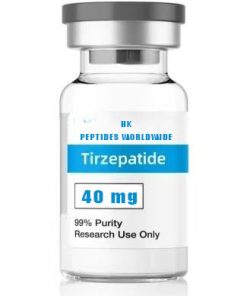
Research Grade Peptide
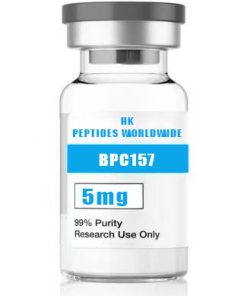
Research Grade Peptide

Research Grade Peptide
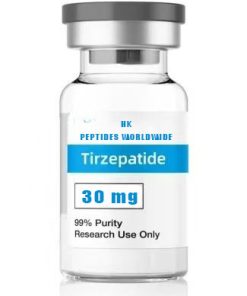
Research Grade Peptide
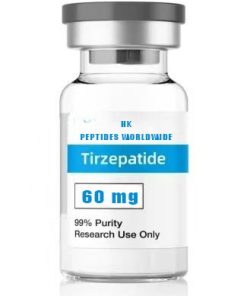
Research Grade Peptide
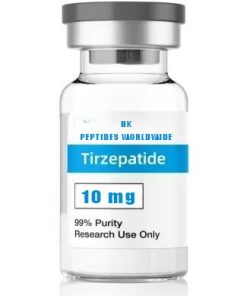
Research Grade Peptide

Research Grade Peptide
Research Grade Peptide
Reviews
There are no reviews yet.