
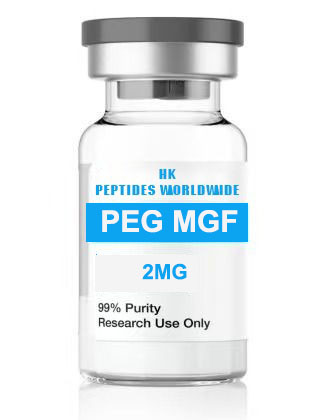
PEG-MGF 2 mg research peptide USA
Original price was: $101.00.$90.00Current price is: $90.00.
Bulk Price for 10 vials
Lyophilized PEG-MGF research peptide, 2 mg per vial, supplied for laboratory and preclinical use only. Batch COA available on request, with U.S. dispatch and cold-chain packaging. Not for human or veterinary consumption.
PEG-MGF 2 mg Research Peptide USA: Product Description and Buyer’s Guide
PEG-MGF 2 mg research peptide USA buyers are typically laboratory professionals sourcing a pegylated form of mechano growth factor (MGF) for controlled in vitro and preclinical work. This product page from HK Peptides Worldwide explains what the vial contains, how researchers typically handle and reconstitute it, and what to check before you buy PEG-MGF online. It is written for licensed researchers and institutional procurement staff in the United States, not for consumers.
If you are searching for PEG-MGF for sale, the most important purchase decision is not price alone. Purity documentation, cold-chain shipping, vial integrity, and clearly stated storage conditions matter far more than a low unit cost.
What Is PEG-MGF 2 mg?
PEG-MGF is a pegylated analog of mechano growth factor, a splice variant of insulin-like growth factor 1 (IGF-1). The “PEG” refers to polyethylene glycol attachment, a common pharmaceutical technique used to extend a molecule’s circulation time and slow enzymatic breakdown in experimental models.
The 2 mg specification refers to the total peptide content per vial. Each unit is supplied as a lyophilized (freeze-dried) powder, which is the standard format for research peptides because it improves stability during storage and transport.
Mechano growth factor was first described in the scientific literature as a muscle-derived growth factor expressed in response to mechanical loading. Researchers interested in the underlying biology can review the primary literature through PubMed, the NIH biomedical database, which indexes MGF and IGF-1 studies. The pegylated variant is studied as a longer-acting alternative in experimental settings, though published data specific to PEG-MGF remains limited relative to native IGF-1.
PEG-MGF vs. Native MGF
Native MGF has a short half-life in circulation, which complicates sustained-exposure study designs. PEGylation changes the pharmacokinetic profile in animal models, potentially allowing less frequent administration in a protocol. Researchers comparing the two should treat them as distinct materials, not interchangeable equivalents.
What the 2 mg Vial Contains
- Lyophilized PEG-MGF peptide, 2 mg per vial
- Sealed, sterile glass vial with a rubber stopper and crimp cap
- Certificate of Analysis (COA) available on request, listing identity and purity
Excipients, if any, should be confirmed on the specific batch COA. Always verify the lot number on the vial against the documentation provided.
Who This Product Is For
This listing targets the U.S. research market: university laboratories, contract research organizations, and independent investigators running cell-culture or preclinical model studies. Institutional buyers typically require a COA and a defined storage chain before placing an order, and those are the details worth confirming early.
This product is not a dietary supplement, drug, or therapeutic. It is sold strictly for laboratory research use and is not intended for human or veterinary consumption. Researchers should confirm that possession and use comply with applicable institutional and federal rules, including DEA and FDA frameworks where relevant.
How to Buy PEG-MGF Online in the USA
Buying research peptides online carries real risk of receiving underdosed or mislabeled material. A reliable PEG-MGF product listing should give you enough information to evaluate the batch before you commit.
Checklist Before You Order
- COA on request. Confirm that a batch-specific Certificate of Analysis exists and shows identity, purity (typically by HPLC), and mass spectrometry confirmation.
- Cold-chain shipping. Lyophilized peptides tolerate ambient temperatures better than reconstituted solutions, but reputable suppliers still use insulated packaging and tracking.
- Clear labeling. The vial should state the peptide name, quantity, and lot number. Blank or generic labels are a warning sign.
- Payment and dispatch clarity. Know the dispatch timeline and whether the supplier ships discreetly within the U.S.
Questions to Ask a Supplier
Ask whether the COA matches your lot, whether the peptide is supplied as an acetate or TFA salt, and what the recommended storage is before and after reconstitution. Suppliers who answer these precisely are generally easier to work with than those who deflect.
Finding a PEG-MGF Supplier Near Me
Searching “PEG-MGF near me” usually reflects a preference for faster domestic shipping and easier communication across time zones. U.S.-based fulfillment shortens transit time, which reduces the risk of temperature extremes in transit. Confirm the dispatch location rather than assuming it from the domain.
Storage, Handling, and Reconstitution
Lyophilized PEG-MGF should be stored frozen, typically at -20°C for longer-term storage, and protected from light and moisture. Allow the vial to reach room temperature before opening to reduce condensation on the powder. Avoid repeated freeze-thaw cycles, which degrade peptide integrity over time.
For reconstitution, researchers commonly use bacteriostatic water or sterile water depending on the protocol; the choice affects stability after mixing. Add the diluent slowly down the vial wall rather than directly onto the powder, then swirl gently. Do not shake vigorously, as foaming and mechanical stress can damage the peptide.
Reconstituted solutions are generally stored refrigerated and used within a defined window per the study protocol and supplier guidance. Record the reconstitution date on the vial. For general laboratory handling standards, the CDC laboratory safety resources provide useful baseline guidance on contamination control and documentation.
PEG-MGF Dosage in Research Contexts
There is no established human dosage for PEG-MGF, and none should be inferred from this page. “PEG-MGF dosage” searches often come from people seeking human-use guidance, which this supplier cannot provide, since the product is sold for research only.
For study design, dose selection must come from published preclinical literature and your institutional review process. Relevant variables include the model organism, route of administration, dosing frequency, and the study duration. Where published PEG-MGF data is sparse, investigators should justify dosing from related IGF-1 or MGF literature and document that rationale.
Any protocol involving animals requires institutional ethics approval before work begins. Reproducibility depends on recording lot numbers, reconstitution volumes, and storage conditions alongside results.
Why Researchers Choose HK Peptides
HK Peptides Worldwide supplies research peptides with batch documentation and a focus on clear product information. Buyers sourcing hk peptides from the U.S. market can browse the HK Peptides catalog for related compounds and specifications.
What matters most in this category is consistency between what the label says and what the COA documents. Researchers who reorder the same lot or a documented successor lot reduce variability between experiments. Ask about lot continuity if your protocol depends on it.
Limitations and Compliance Notes
Research peptides are not approved medicines. PEG-MGF has not been evaluated by the FDA for safety or efficacy in humans, and marketing language suggesting therapeutic benefit should be treated cautiously. Suppliers who make human-use claims are a compliance risk to the researcher as well as to themselves.
Purity figures reported on a COA reflect the tested batch, not a guarantee across all future batches. Institutions with strict procurement policies may require independent third-party verification, which is reasonable for any peptide supplier.
Keep records of purchase, receipt, and storage. Documentation protects both the integrity of your data and your institutional compliance position.
Frequently Asked Questions
Is PEG-MGF 2 mg intended for human use?
No. It is supplied strictly as a research chemical for laboratory and preclinical investigation. It is not a drug, supplement, or approved therapeutic.
How should PEG-MGF be stored on arrival?
Keep the lyophilized vial frozen, typically at -20°C, protected from light and moisture. Let it equilibrate to room temperature before opening to limit condensation.
Does a 2 mg vial come with a Certificate of Analysis?
COAs are typically available on request and should match the lot number on your vial. Confirm this with the supplier before ordering.
Can I get PEG-MGF shipped within the United States?
Many U.S.-focused suppliers dispatch domestically, which shortens transit time. Verify dispatch location and packaging method rather than assuming it.
What is the correct PEG-MGF dosage for research?
Dosing must be drawn from published preclinical literature and approved by your institutional review process. No human dose is established or recommended here.
Why is PEG attached to MGF?
PEGylation is used experimentally to slow enzymatic degradation and extend circulation time in animal models, compared with the short half-life of native MGF.
SEO Details
SEO Title: PEG-MGF 2 mg Research Peptide USA | Buy Online
Meta Description: Source PEG-MGF 2 mg research peptide in the USA with batch COAs, cold-chain shipping, and clear storage guidance. Research use only—order with confidence.
URL Slug: peg-mgf-2-mg-research-peptide-usa
Focus Keyphrase: PEG-MGF 2 mg research peptide USA
Product Short Description: Lyophilized PEG-MGF research peptide, 2 mg per vial, supplied for laboratory and preclinical use only. Batch COA available on request, with U.S. dispatch and cold-chain packaging. Not for human or veterinary consumption.
Tags: PEG-MGF, PEG-MGF 2 mg, PEG-MGF research peptide, buy PEG-MGF online, PEG-MGF for sale, PEG-MGF USA, PEG-MGF near me, where to buy PEG-MGF, hk peptides, pegylated mechano growth factor, MGF research peptide, research peptides USA, laboratory peptides, peptide COA, lyophilized peptide, preclinical research, peptide supplier USA, research use only peptide, IGF-1 research, peptide storage guide
Be the first to review “PEG-MGF 2 mg research peptide USA”
Related products
Research Grade Peptide
Research Grade Peptide
Research Grade Peptide
Research Grade Peptide
Research Grade Peptide
Research Grade Peptide
Research Grade Peptide
Research Grade Peptide
Reviews
There are no reviews yet.