
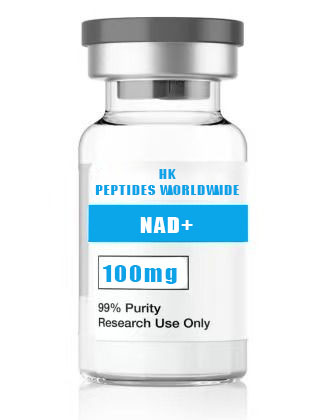
NAD⁺ 100 mg Research Compound USA
Original price was: $54.00.$45.00Current price is: $45.00.
Bulk Price for 10 Vials.
NAD⁺ 100 mg is a laboratory research compound studied for its involvement in cellular energy production, mitochondrial function, and redox reactions. It is supplied for scientific investigations into cellular metabolism and biochemical processes.
NAD⁺ 100 mg Research Compound USA: A Complete Buyer and Lab Guide
NAD⁺ 100 mg research compound USA buyers encounter most often arrives as a lyophilized (freeze-dried) vial of nicotinamide adenine dinucleotide, a coenzyme central to cellular energy metabolism. This guide explains what the compound is, how researchers handle and store it, what to check before you order NAD⁺ 100 mg online, and how laboratory procurement differs from consumer supplement shopping. It is written for research professionals, institutional buyers, and independent laboratories evaluating research-grade peptide and compound suppliers in the United States.
NAD⁺ (oxidized nicotinamide adenine dinucleotide) is not a peptide in the strict biochemical sense, though it is frequently grouped with peptide research materials in catalog listings. Understanding that distinction matters when you compare specifications, documentation, and handling requirements across suppliers.
What Is NAD⁺ 100 mg and Why Researchers Study It?
NAD⁺ is a dinucleotide that participates in redox reactions across nearly every living cell. It shuttles electrons in metabolic pathways such as glycolysis, the citric acid cycle, and oxidative phosphorylation, and it serves as a substrate for enzymes including sirtuins, PARPs, and CD38.
A 100 mg unit is a practical research quantity: large enough for multiple assay runs, small enough to limit waste and cost when a protocol changes. Laboratories typically study NAD⁺ in the context of mitochondrial function, cellular aging models, DNA repair signaling, and metabolic regulation. Because these are in vitro and preclinical research areas, the compound is supplied strictly for laboratory investigation rather than human use.
NAD⁺, NADH, and the Peptide Classification Question
NAD⁺ and NADH are the oxidized and reduced forms of the same coenzyme pair, and researchers often need both to model redox balance. Neither is a peptide; peptides are short amino acid chains. Catalog listings that describe an “NAD⁺ 100 mg peptide USA” product usually mean a research compound sold alongside peptide lines, so confirm molecular identity rather than relying on category labels.
NAD⁺ 100 mg Specifications and Quality Benchmarks
Quality in a research compound is defined by documentation as much as by the material itself. Before purchasing, request a certificate of analysis (CoA) for the specific lot you will receive, not a generic representative example.
What a Certificate of Analysis Should Show
A useful CoA for NAD⁺ typically reports identity confirmation, purity by an appropriate analytical method (commonly HPLC), appearance, and lot-specific testing dates. Reputable suppliers also describe the water content and any residual solvents where relevant. Cross-check the CoA lot number against the vial label.
Purity, Form, and Packaging
Research-grade NAD⁺ usually appears as a white to off-white lyophilized powder in a sealed glass vial. Common catalog purities are stated as ≥95% or ≥98%, so compare like-for-like figures. Confirm whether the 100 mg refers to net compound mass or total vial content, and check whether the vial is amber or clear glass, since light exposure affects stability.
How to Order NAD⁺ 100 mg Online in the United States
Ordering research compounds online involves more verification than buying standard lab reagents. Treat supplier screening as part of experimental design, because a poorly documented batch can invalidate weeks of work.
Supplier Checklist Before You Buy
Confirm the supplier ships domestically within the United States, publishes lot-specific documentation, and provides clear handling and storage guidance. Ask how vials are packaged for temperature control and whether cold-chain shipping is used in warmer months. A capable NAD⁺ 100 mg online supplier should answer these questions before purchase rather than after.
Also verify that the supplier states research-use-only status explicitly. Anyone marketing the same compound for human consumption is signaling different quality controls and regulatory posture than a laboratory supplier.
NAD⁺ 100 mg Product Price and Availability Factors
Price for a 100 mg research vial varies with purity grade, documentation depth, lot size, packaging, and shipping terms. Rather than chasing the lowest listing, compare cost per verified milligram and factor in cold-chain shipping and re-testing. Availability can fluctuate with manufacturing batches, so confirm current stock and lead time when planning time-sensitive protocols.
Bulk, Wholesale, and Laboratory Supply Streams
Larger research programs rarely buy single vials indefinitely. A university core facility, a contract research organization, or a multi-site study may need consistent lots across months, which changes the procurement conversation.
NAD⁺ 100 mg Bulk Order and Wholesale Considerations
For an NAD⁺ 100 mg bulk order or wholesale agreement, ask whether the supplier can reserve material from a single manufacturing lot. Lot continuity reduces variability between experimental phases, which matters when comparing results across cohorts. Wholesale terms should specify documentation per lot, storage requirements during transit, and the process for resolving a failed specification.
Institutional NAD⁺ 100 mg Laboratory Supply
Institutions often require purchase orders, vendor onboarding, safety documentation, and specified shipping addresses. Confirm the supplier can meet those administrative steps without delaying delivery. For NAD⁺ 100 mg laboratory research supply, consistent documentation is usually more valuable than marginal price savings.
Handling, Storage, and Solubility in the Lab
NAD⁺ is relatively sensitive to heat, light, moisture, and repeated freeze-thaw cycles. Good handling practice protects the investment and the integrity of your data.
Storage Best Practices
Store lyophilized NAD⁺ in a freezer at the temperature specified on the vial or CoA, typically well below freezing for long-term storage. Keep vials sealed and desiccated, and protect them from light. Once reconstituted, follow the supplier’s guidance and the stability data relevant to your buffer system; many protocols recommend aliquoting to avoid repeated freeze-thaw cycles.
Reconstitution and Solubility Notes
NAD⁺ is water-soluble, and researchers commonly prepare solutions in buffer matched to the assay pH. Record the exact solvent, concentration, and preparation date in your lab notebook, since these details affect reproducibility. Where a protocol calls for the reduced form, use NADH rather than attempting conversion in solution.
Regulatory Status and Responsible Research Use
In the United States, research compounds occupy a different regulatory lane than approved drugs or dietary supplements. Suppliers sell NAD⁺ 100 mg material for laboratory research only, and labeling should reflect that restriction. Researchers should confirm institutional biosafety and chemical hygiene requirements before introducing a new compound into a workflow.
Responsible sourcing also means avoiding suppliers whose marketing implies human use, dosing, or therapeutic benefit. A premium NAD⁺ 100 mg peptide or compound listing should emphasize identity, purity, and documentation rather than wellness claims. That posture protects both the researcher and the institution.
Comparing a Premium NAD⁺ 100 mg Peptide Listing
The word “premium” carries no standardized meaning in research supply, so evaluate concrete attributes instead. Look for lot-specific analysis, clear storage instructions, tamper-evident packaging, and responsive technical support.
Consider three practical comparisons. First, purity grade and the analytical method supporting it. Second, documentation completeness, including whether the CoA matches the shipped lot. Third, logistics, such as domestic shipping speed, temperature control, and replacement policy for damaged or out-of-spec material. A supplier that performs well on all three is a better long-term partner than one that wins on headline price alone.
Frequently Asked Questions
Is NAD⁺ 100 mg a peptide?
No. NAD⁺ is a dinucleotide coenzyme, not a peptide. It is often cataloged alongside peptides because both are sold as research compounds, but the molecular identity and handling differ.
What does 100 mg refer to on the vial?
It usually refers to the mass of NAD⁺ in the vial, but confirm this with the supplier. Ask whether the figure is net compound mass or total content including any excipients.
How should NAD⁺ 100 mg be stored on arrival?
Store it frozen and protected from light and moisture, following the temperature specified on the vial or CoA. Allow the sealed vial to equilibrate to room temperature before opening to avoid condensation.
Can I order NAD⁺ 100 mg for personal use?
Research-grade NAD⁺ is sold for laboratory research only, not for human consumption. Suppliers who market it for personal use are not following standard research-supply labeling conventions.
What should I check before placing a bulk order?
Confirm lot continuity, per-lot documentation, storage and shipping conditions, and the process for handling specification failures. Get these commitments in writing before committing to volume.
Does NAD⁺ 100 mg product price vary by supplier?
Yes. Price reflects purity grade, documentation, packaging, and shipping terms. Compare cost per verified milligram rather than sticker price alone.
Be the first to review “NAD⁺ 100 mg Research Compound USA”
Related products
Research Grade Peptide
Research Grade Peptide
Research Grade Peptide
Research Grade Peptide
Research Grade Peptide
Research Grade Peptide
Research Grade Peptide
Research Grade Peptide
Reviews
There are no reviews yet.