
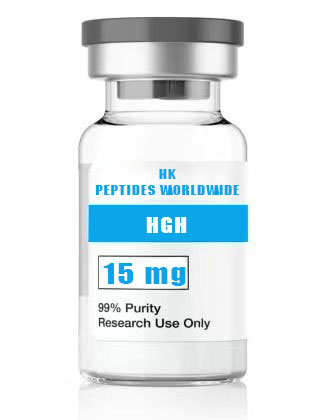
HGH 15 mg Recombinant Growth Hormone Research USA
Original price was: $84.00.$73.00Current price is: $73.00.
Bulk Price for 10 Vials.
HGH 15 mg is a recombinant human growth hormone studied in scientific research for its molecular structure, protein activity, and interactions with growth hormone receptors. It is used in laboratory investigations exploring endocrine signaling and cellular processes.
HGH 15 mg Recombinant Growth Hormone Research USA
Researchers across the United States who study somatropin signaling, pituitary biology, and metabolic regulation need a reliable reference material with clear documentation. HGH 15 mg recombinant growth hormone research USA buyers commonly look for is a lyophilized somatropin preparation supplied with a certificate of analysis (COA) and clear handling guidance. This overview explains what the material is, how it is typically presented for laboratory work, what to verify before you buy HGH peptide in USA markets, and how to evaluate an HGH peptide supplier USA researchers can trust.
The goal here is practical: help you understand specifications, sourcing standards, storage requirements, and the questions worth asking before placing an order, whether you need a single vial or an HGH peptide bulk supply arrangement.
What HGH 15 mg Recombinant Growth Hormone Is
Recombinant human growth hormone (rHGH), also called somatropin, is a 191-amino-acid polypeptide produced through recombinant DNA technology rather than extracted from pituitary tissue. The “15 mg” figure refers to the total mass of lyophilized peptide per vial — not the same as the international unit (IU) count. Because potency conversions vary by preparation and assay method, researchers should rely on the specific COA rather than assuming a fixed mg-to-IU ratio.
This distinguishes rHGH from the smaller growth hormone–releasing peptides often grouped loosely under the “HGH peptide” label. Those compounds act upstream by stimulating endogenous secretion, while recombinant somatropin itself is the full-length hormone. Recognizing this difference matters for experimental design, dosing models, and the analytical methods you select.
Recombinant Somatropin vs. Growth Hormone Secretagogues
Secretagogues such as GHRH analogs or ghrelin-receptor agonists influence the body’s own release pathways. Recombinant growth hormone supplies the hormone directly. If your study examines receptor binding, downstream IGF-1 pathway activation, or somatropin stability, you need the recombinant protein — not a secretagogue. Suppliers that conflate the two categories are a warning sign, and you can review category distinctions on the HK Peptides Worldwide peptide research catalog to see how products should be organized.
Who This Material Is For
The most likely audience is laboratory professionals: academic researchers, contract research organizations, and independent analytical labs working in endocrinology, cell signaling, or metabolic disease models. This is not consumer wellness content, and the material is not intended for human or veterinary use. It is a research-grade reference compound.
Before ordering, confirm that your institution permits the work, that your storage infrastructure can maintain cold-chain requirements, and that your protocols are reviewed under the appropriate institutional oversight. Reputable suppliers state these boundaries plainly rather than glossing over them.
Key Specifications to Evaluate
A research-grade HGH peptide product should be described with enough technical detail that a laboratory can plan around it. Look for the following:
- Purity: Commonly reported by high-performance liquid chromatography (HPLC). A precise percentage should appear on the COA.
- Identity and mass: Confirmed by mass spectrometry (MS), with the observed molecular weight stated.
- Form: Lyophilized powder is standard for stability during shipping and storage.
- Vial content: The labeled mass (15 mg) plus any excipients or buffer components.
- Sterility and endotoxin data: Relevant if cell-culture work is planned.
- Batch number and test date: Traceability to the specific lot you receive.
Clear specifications separate an HGH peptide research grade product from an unverified listing. The HK Peptides Worldwide research supplies collection is structured around these documentation standards, which helps researchers compare like with like.
Handling and Storage Considerations
Lyophilized somatropin is generally stored refrigerated and protected from light, with reconstitution protocols depending on the intended assay. Follow the supplier’s handling sheet and your laboratory’s standard operating procedures. Avoid repeated freeze-thaw cycles, and record reconstitution dates. These are ordinary good-laboratory-practice steps, but they directly affect the integrity of your results.
How to Buy HGH Peptide in USA Markets Responsibly
Lab buyers typically weigh four things: documentation quality, shipping reliability, cold-chain handling, and price transparency. Documentation comes first — without a COA you cannot verify what you received. Shipping matters next, because temperature excursions during transit can compromise a lyophilized peptide even if the vial looks intact.
An HGH peptide online store should publish clear product pages, contact channels, and policies on shipping and returns. Ask how orders are packed for US destinations and whether tracking and delivery timelines are stated up front. For institutional purchasing, confirm whether the supplier can provide documentation suitable for procurement records.
Understanding HGH Peptide Price and Wholesale Options
HGH peptide price in the US research market varies with vial size, purity grade, batch testing, and order volume. Rather than shopping purely on the lowest figure, compare cost per milligram alongside documentation depth. A cheaper listing with no third-party verification is rarely the better value.
If your lab runs multiple studies, HGH peptide wholesale and bulk supply arrangements often reduce per-unit cost and improve lot consistency. Ask whether bulk orders draw from a single production batch, how lots are documented, and whether the supplier offers consistent HGH 15 mg configurations. Consistency across lots is often more valuable than marginal savings.
What to Look for in an HGH Peptide Supplier USA Researchers Can Trust
Start with transparency. A credible HGHPeptide Supplier USA should clearly state product specifications, publish analytical documentation, and describe handling requirements without exaggeration. Be cautious of claims that seem medical rather than scientific, or that promise outcomes no research supply can guarantee.
Second, check responsiveness. A supplier that answers technical questions about purity methods, batch numbers, and shipping conditions is easier to work with over the long term. Third, review overall business clarity — policies, contact details, and clear labeling of research-only status. The HK Peptides Worldwide about page gives context on how the supplier positions research materials and documentation.
Documentation Checklist Before You Order
- Certificate of analysis for the specific lot
- HPLC purity figure and MS identity confirmation
- Clear statement of vial content and form
- Storage and reconstitution guidance
- Shipping and cold-chain details for US delivery
- Research-use-only labeling
Running through this list takes minutes and prevents most sourcing problems.
Common Research Applications
Recombinant growth hormone appears in studies of somatotropin receptor binding, JAK-STAT signaling, IGF-1 induction, and adipocyte metabolism. It also serves as a reference standard in analytical method development where somatropin identity or concentration must be confirmed. In each case, the reliability of the material shapes the reliability of the data.
For background on the hormone’s biology and clinical history, the U.S. National Library of Medicine and PubMed Central host extensive peer-reviewed literature. Reading primary sources before finalizing a protocol helps clarify expected behavior, appropriate controls, and validated assay methods.
FAQ
What does “15 mg” mean on an HGH vial? It refers to the mass of lyophilized recombinant growth hormone in the vial. Because mg-to-IU conversion varies by preparation and assay, rely on the COA rather than a general rule of thumb.
Is HGH peptide the same as recombinant growth hormone? Not necessarily. “HGH peptide” is used loosely online, sometimes covering secretagogues. Always confirm you are ordering full-length recombinant somatropin if that is what your study requires.
How should I verify research grade quality? Request the lot-specific COA, review the HPLC purity and MS identity data, and confirm storage guidance matches your lab’s capabilities.
Can I order in bulk in the United States? Many research suppliers offer wholesale and bulk supply options. Ask whether bulk units come from a single batch and how documentation is handled per lot.
What storage conditions are typical? Refrigerated, light-protected storage of the lyophilized powder is standard, with assay-specific reconstitution protocols. Follow the supplier sheet and your SOPs.
Where can I confirm handling and shipping policies? Review the supplier’s product and policy pages directly, and ask about US cold-chain shipping before ordering.
Be the first to review “HGH 15 mg Recombinant Growth Hormone Research USA”
Related products
Research Grade Peptide
Research Grade Peptide
Research Grade Peptide
Research Grade Peptide
Research Grade Peptide
Research Grade Peptide
Research Grade Peptide
Research Grade Peptide
Reviews
There are no reviews yet.