
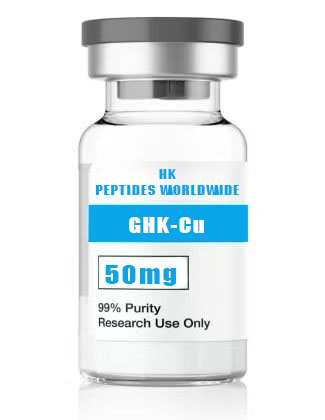
GHK-Cu 50 mg Copper Peptide Research USA
Original price was: $41.00.$33.00Current price is: $33.00.
Bulk Price for 10 Vials.
Premium GHK-Cu 50 mg lyophilized copper peptide supplied for laboratory research in the USA, with batch-specific CoA documentation, HPLC and MS verification, and options for single vials, wholesale, and bulk orders.
GHK-Cu 50 mg Copper Peptide Research USA: A Buyer’s and Lab Guide
In the United States, GHK-Cu 50 mg copper peptide research material has become one of the most requested formats among laboratories studying skin biology, wound-healing pathways, and cellular repair. The keyword matters because a 50 mg vial sits in a practical middle ground—large enough for multi-arm studies, small enough to stay manageable for a single bench setup. This guide explains what the material is, how researchers evaluate quality and purity, what to look for in a US supplier, and how to plan a purchase that fits real experimental needs.
Whether you are sourcing for an academic lab, a contract research group, or an independent research program, the same questions apply: Is the material genuinely GHK-Cu, is it documented, and does it arrive in a form your protocols can use? Here is a clear, authoritative walkthrough from the team at HK Peptides Worldwide.
What Is GHK-Cu 50 mg Copper Peptide?
GHK-Cu is a copper-binding tripeptide with the sequence glycine–histidine–lysine, complexed with a copper(II) ion. It occurs naturally in human plasma, saliva, and urine, and researchers have studied it for decades in the context of tissue remodeling, collagen synthesis, and antioxidant activity. The “50 mg” figure refers to the total peptide mass per vial, not the copper content.
A 50 mg format is typically supplied as a lyophilized (freeze-dried) powder in a sealed vial. That presentation supports longer storage and gives researchers flexibility to reconstitute to the concentration their protocol requires. It is important to distinguish the total mass from the active peptide content—purity and copper-loading documentation are what make the number meaningful.
Why Researchers Choose the 50 mg Format
Smaller vials can run out mid-study; larger quantities can create waste and storage challenges. The 50 mg vial balances both. It suits dose-response work, pilot studies, and multi-condition designs where several reconstitution batches are needed. Researchers often pair it with reference standards so that a single GHK-Cu 50 mg laboratory research program can cover both analytical validation and biological assays.
Key Research Context and Mechanism of Interest
GHK-Cu’s appeal in the lab comes from its copper-delivery behavior. The peptide binds copper and can influence gene expression related to extracellular matrix proteins, including collagen and glycosaminoglycans. Published reviews describe its role in wound healing and skin remodeling models, though most findings come from in vitro and animal work rather than large human trials.
That distinction matters for anyone writing a protocol or a paper. Treat GHK-Cu as a research compound with a substantial mechanistic literature base—not as a proven therapeutic. For background on the peptide and related copper-binding molecules, the U.S. National Library of Medicine’s PubMed database is a reliable starting point for peer-reviewed literature.
Purity, Identity, and Documentation
Quality assessment for any GHK-Cu 50 mg peptide USA purchase should center on three documents: a certificate of analysis (CoA), high-performance liquid chromatography (HPLC) purity data, and mass spectrometry (MS) confirmation of identity. Copper content is a separate consideration and should be stated if the supplier markets the material as a copper complex.
HPLC results help confirm that the dominant peak corresponds to the peptide. MS data confirms molecular identity. A CoA that includes batch number, test date, and method details is far more useful than a generic purity percentage. Ask for these documents before ordering, and keep them with your study records.
How to Evaluate a GHK-Cu 50 mg Online Supplier
The supplier question is where most purchasing risk lives. A trustworthy GHK-Cu 50 mg online supplier should be transparent about manufacturing, testing, and handling. Look for clear product pages, batch-specific documentation, and responsive technical communication. Vague claims and stock-photo certificates are warning signs.
In the US market, researchers also look for domestic shipping and clear labeling. A GHK-Cu 50 mg peptide availability page that does not state storage conditions, shipping methods, or documentation practices is worth questioning before you commit. For general guidance on research chemical handling and safety practices, institutions such as NIH publish resources that can inform lab protocols.
Questions to Ask Before You Buy
- Can you provide a batch-specific CoA with HPLC and MS data?
- Is the material lyophilized, and what is the recommended storage temperature?
- How is the vial sealed and labeled for research use?
- Do you ship domestically, and how is temperature controlled in transit?
- What is the lead time for a GHK-Cu 50 mg bulk order versus a single vial?
Clear answers to these questions separate a professional GHK-Cu 50 mg manufacturer relationship from a one-off transaction.
Ordering Options: Single Vials, Wholesale, and Bulk
Purchasing patterns vary by lab size. A single GHK-Cu 50 mg vial for sale suits pilot work or method development. As projects scale, a GHK-Cu 50 mg wholesale arrangement or GHK-Cu 50 mg bulk order reduces per-unit handling and keeps batch consistency across arms of a study. Consistency matters: using the same lot across a multi-week experiment reduces variability you would otherwise have to explain.
If you plan to Order GHK-Cu 50 mg online for a larger program, confirm lot availability in advance and ask whether the supplier can reserve material from a single production batch. This is especially relevant for studies comparing dose levels where lot-to-lot differences could confound results.
Planning a GHK-Cu 50 mg Laboratory Supply Calendar
Map your supply needs to your experimental timeline rather than ordering reactively. Estimate the number of reconstitutions, the concentration range, and the duration of each study phase. Then add a buffer for repeat runs. A well-planned GHK-Cu 50 mg research supply schedule avoids the common trap of switching lots mid-study because a vial ran short.
Price, Value, and What a Fair GHK-Cu 50 mg Product Price Looks Like
Pricing for research peptides varies with purity, documentation, batch size, and packaging. Rather than chasing the lowest GHK-Cu 50 mg product price, compare value: a slightly higher cost that includes full analytical documentation, reliable cold-chain shipping, and responsive support is usually the better research investment. Cheap material with no traceable CoA creates downstream costs—repeated experiments, wasted reagents, and uncertainty in your results.
Ask suppliers to quote clearly for single vials, multi-vial orders, and bulk quantities so you can compare apples to apples. Volume pricing should be transparent, not negotiated in the dark.
Storage, Handling, and Reconstitution Basics
Lyophilized GHK-Cu is generally stored refrigerated or frozen, protected from light and moisture, per the supplier’s stated conditions. Once reconstituted, stability depends on the solvent, concentration, and storage temperature, so follow documented guidance and aliquot where appropriate to avoid repeated freeze-thaw cycles. Use sterile technique and label vials with date and concentration.
These practices protect both the material and the integrity of your data. If your lab has standard operating procedures for peptide handling, align the GHK-Cu workflow with them rather than improvising.
Why Professional-Grade Sourcing Matters for Premium Research
Premium GHK-Cu 50 mg peptide sourcing is about reproducibility. Research is only as strong as its inputs, and a documented, consistent supply chain lets you defend your methods and replicate your findings. For labs in the United States, working with a supplier that understands domestic shipping, documentation expectations, and research-only labeling reduces friction.
Browsing the full catalog at HK Peptides Worldwide is a practical way to compare formats, check documentation practices, and confirm availability before you finalize a protocol.
Frequently Asked Questions
What does “50 mg” mean on a GHK-Cu vial?
It refers to the total mass of lyophilized peptide in the vial. It is not the copper content and does not by itself indicate purity—check the CoA for HPLC and MS data.
How do I verify GHK-Cu purity before ordering?
Request a batch-specific certificate of analysis showing HPLC purity and mass spectrometry identity confirmation. Reputable suppliers provide this without hesitation.
Is GHK-Cu 50 mg available for wholesale or bulk research orders?
Many suppliers offer volume options. Confirm whether bulk orders draw from a single production lot to preserve consistency across a study.
How should GHK-Cu be stored in the lab?
Store lyophilized material per the supplier’s stated conditions, typically protected from light and moisture at refrigerated or frozen temperatures. Follow documented reconstitution guidance.
What documentation should accompany a US research order?
A CoA with batch number, test methods, and date, plus clear labeling indicating research use only, and handling and storage instructions.
Can I order a single vial for a pilot study?
Yes. A single GHK-Cu 50 mg vial is a practical starting point for method development or small pilot work before scaling to larger quantities.
Be the first to review “GHK-Cu 50 mg Copper Peptide Research USA”
Related products
Research Grade Peptide
Research Grade Peptide
Research Grade Peptide
Research Grade Peptide
Research Grade Peptide
Research Grade Peptide
Research Grade Peptide
Research Grade Peptide
Reviews
There are no reviews yet.