
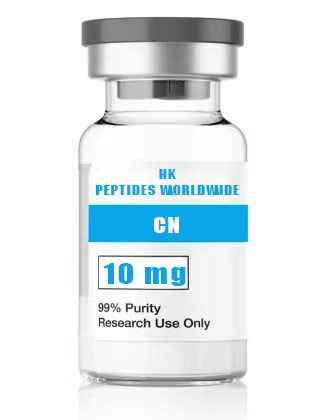
CJC-1295 With DAC 10 mgIn-Vitro Research Peptide
Original price was: $239.00.$218.00Current price is: $218.00.
Bulk Prrice for 10 Vials.
CJC-1295 With DAC 10 mg is a lyophilized research peptide with a Drug Affinity Complex for extended half-life studies. Supplied with lot-specific COA, HPLC purity data, and mass spectrometry confirmation, it is intended strictly for in-vitro laboratory research. Batch-traceable and shipped with cold-chain handling for U.S. laboratories.
CJC-1295 With DAC 10 mg In-Vitro Research Peptide: A Researcher’s Guide
CJC-1295 With DAC 10 mg in-vitro research peptide is a lyophilized laboratory compound supplied for preclinical, cell-based, and analytical study rather than for human or veterinary use. Its defining feature is the Drug Affinity Complex (DAC) that extends its half-life, which is why researchers studying growth hormone secretagogue pathways often choose it over unmodified analogs. This guide explains what the compound is, how it is handled in vitro, what specifications to verify, and how to source it responsibly in the United States. Researchers comparing laboratory-grade peptides can review the HK Peptides Worldwide research catalog before finalizing a study design.
What Is CJC-1295 With DAC?
CJC-1295 is a synthetic peptide analog modeled on growth hormone-releasing hormone (GHRH). The “With DAC” version attaches a maleimidopropionic acid group that binds to serum albumin, slowing clearance and producing a much longer effective window in circulation than the original molecule. That difference matters for in-vitro researchers because experimental timing, exposure windows, and assay endpoints shift accordingly.
The peptide is typically supplied as a sterile-filtered lyophilized powder in a 10 mg vial. It is not a drug, dietary supplement, or therapeutic product. In the United States, it is sold strictly for laboratory research, and reputable suppliers mark every unit “not for human consumption.”
The role of the Drug Affinity Complex
The DAC group forms a covalent bond with albumin, the most abundant protein in blood plasma. In vitro models that include albumin or serum can therefore behave differently from serum-free systems. Researchers should document whether their medium contains albumin, since that variable can influence observed peptide availability and degradation rates.
Why Researchers Study This Peptide In Vitro
Preclinical work on GHRH analogs focuses on receptor binding, signal transduction, and secretion dynamics in pituitary cell cultures and related model systems. The DAC modification makes CJC-1295 a useful comparator when scientists want to examine how half-life extension affects receptor occupancy over time. Typical study areas include:
- GHRH receptor binding affinity and selectivity assays
- Comparative stability studies against unmodified CJC-1295
- Pituitary and hypothalamic cell culture signaling experiments
- Analytical method development for peptide quantification
- Albumin-binding kinetics in serum-containing media
None of these applications involve administration to humans or animals. The compound’s value lies in what it reveals about peptide pharmacology at the cellular and molecular level.
Specifications to Verify Before You Order
Quality documentation separates credible suppliers from resellers. A 10 mg vial should arrive with a certificate of analysis (COA) that includes high-performance liquid chromatography (HPLC) purity results, mass spectrometry confirmation, and a batch number. Look for purity of 98% or higher and a lot-specific, not generic, COA.
Confirm the following before purchase:
| Specification | What to Check |
|---|---|
| Purity | HPLC report, typically ≥98% |
| Identity | Mass spectrometry confirmation |
| Form | Lyophilized powder, 10 mg per vial |
| Storage | Frozen, protected from light |
| Documentation | Batch-specific COA |
If a vendor will not share a lot-specific COA, treat that as a red flag. The U.S. Food and Drug Administration publishes guidance on research chemical labeling that can help buyers understand what legitimate documentation looks like.
Handling and Reconstitution in the Lab
Lyophilized peptide is stable for extended periods when stored frozen and dry. Once reconstituted, stability depends heavily on buffer choice, pH, and temperature. Follow these general laboratory practices:
Storage before reconstitution
Keep vials sealed and frozen, ideally at -20°C or colder, away from light and moisture. Allow vials to reach room temperature before opening to prevent condensation from degrading the powder.
Reconstitution basics
Use a suitable solvent such as bacteriostatic or sterile water, adding it slowly down the vial wall to avoid foaming. Swirl gently; do not vortex or shake vigorously, as mechanical stress can denature peptides. Record the reconstitution date and concentration on the vial.
Post-reconstitution handling
Aliquot reconstituted peptide to limit freeze-thaw cycles, and store working samples at the appropriate temperature for your assay. Complete analytical work with calibrated instruments, and document every step in your lab notebook. For broader context on peptide handling standards, the National Center for Biotechnology Information hosts extensive primary literature on GHRH analog stability.
CJC-1295 With DAC Dosage: What In-Vitro Research Requires
Researchers frequently search for “CJC-1295 With DAC dosage,” but in an in-vitro context there is no universal dose. The right concentration depends entirely on your assay, cell type, and endpoints. A typical approach involves dose-response testing across a range of concentrations to establish an effective working level for your specific model.
Start with published cell-culture literature for GHRH analogs, then run pilot experiments to refine concentrations. Document your rationale, because reviewers and colleagues will ask how you selected your exposure levels. Any dosing figures found online often refer to informal human use and should not be applied to laboratory protocols.
Where to Buy CJC-1295 With DAC in the United States
Buyers searching for CJC-1295 With DAC 10 mg online should prioritize documentation over price. Request the COA, confirm the batch number matches your vial, and verify the supplier ships domestically with proper cold-chain handling. Shipping conditions matter: peptides exposed to heat in transit may arrive degraded even if the COA looks perfect.
For those searching “CJC-1295 With DAC near me,” domestic suppliers reduce transit time and customs complications. Confirm the vendor discloses shipping temperature controls and offers tracking. Reviewing HK Peptides Worldwide shipping and quality policies can clarify what to expect before you commit to an order.
Evaluating CJC-1295 With DAC price
CJC-1295 With DAC price varies with purity, documentation quality, and packaging. An affordable CJC-1295 With DAC listing is only a good deal if the COA is verifiable and the batch is traceable. A cheap vial with no documentation costs more in wasted experiments than a properly documented one. Compare total cost, including shipping and cold-chain handling, rather than the sticker price alone.
Screening suppliers before purchase
Use a short checklist: lot-specific COA, HPLC and mass spec data, clear research-only labeling, domestic shipping with temperature control, responsive support, and transparent return or replacement policies. Suppliers that fail two or more of these criteria are not worth the risk to your study timeline.
Common Mistakes in Research Peptide Purchasing
Even experienced labs slip on a few basics. Storing unopened vials in a warm drawer, skipping the COA check, or using outdated literature concentrations for a new cell line are common missteps. Others include reconstituting the entire vial when only a fraction is needed and failing to label aliquots clearly.
A second frequent error is buying based on search rankings alone. The most visible listing is not automatically the most reliable. Cross-check supplier documentation against third-party reviews and independent verification where available. The International Peptide Society and similar professional bodies publish resources on responsible research chemical use and documentation expectations.
Frequently Asked Questions
Is CJC-1295 With DAC 10 mg suitable for human use?
No. It is supplied for in-vitro laboratory research only. Human or veterinary use is outside its intended purpose, and reputable suppliers label every vial accordingly.
What purity should I expect?
A quality 10 mg vial should show at least 98% purity on HPLC analysis, confirmed by mass spectrometry. Always verify the COA is specific to your batch.
How should I store the peptide?
Keep the lyophilized powder frozen at -20°C or colder, protected from light. After reconstitution, aliquot and minimize freeze-thaw cycles.
Can I find CJC-1295 With DAC for sale domestically?
Yes. Several U.S.-based research suppliers stock it, and domestic sourcing shortens transit time and reduces temperature exposure during shipping.
How do I choose a reconstitution solvent?
Sterile or bacteriostatic water works for most assays. Match your solvent to your buffer system and assay requirements, and add it gently to avoid foaming.
Does the DAC affect in-vitro results?
Potentially. The DAC group binds albumin, so serum-containing media may produce different observations than serum-free systems. Document your medium composition carefully.
Be the first to review “CJC-1295 With DAC 10 mgIn-Vitro Research Peptide”
Related products
Research Grade Peptide
Research Grade Peptide
Research Grade Peptide
Research Grade Peptide
Research Grade Peptide
Research Grade Peptide
Research Grade Peptide
Research Grade Peptide
Reviews
There are no reviews yet.