
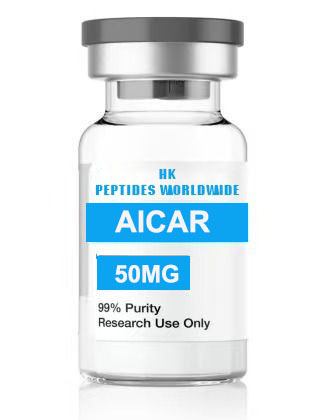
AICAR 5 mg research compound USA
Original price was: $69.00.$60.00Current price is: $60.00.
Bulk Price for 10 Vials.
AICAR 5 mg research compound supplied for U.S. laboratory use in AMPK and metabolic studies. Lyophilized powder with batch documentation, clear labeling, and domestic shipping for reliable research workflows.
AICAR 5 mg Research Compound USA: What Lab Buyers Should Know
AICAR 5 mg research compound USA listings serve laboratories studying AMP-activated protein kinase (AMPK) signaling, cellular energy balance, and metabolic pathways. This guide explains what AICAR is, how researchers evaluate a 5 mg vial, how to vet suppliers, and where the compound fits into pre-clinical study design. It also covers handling, storage, and documentation standards for U.S. labs comparing research-grade peptide and compound suppliers.
What Is AICAR?
AICAR stands for 5-aminoimidazole-4-carboxamide ribonucleotide. It is a cell-permeable analog of the naturally occurring intermediate ZMP (AICA ribonucleotide) and is widely used as a pharmacological activator of AMPK. In laboratory settings, researchers apply it to study how cells shift toward catabolic metabolism when energy charge drops.
The compound mimics the effects of low cellular ATP. Once taken up by cells, it is phosphorylated to ZMP, which activates AMPK without requiring an actual change in the AMP-to-ATP ratio. That property makes AICAR a practical tool for isolating AMPK-dependent effects in controlled experiments.
AICAR is a research chemical only. It is not a drug, dietary supplement, or approved therapeutic, and U.S. suppliers rightly restrict it to laboratory use.
The 5 mg Vial Format: Why Quantity Matters
A 5 mg vial is a practical size for pilot studies, method development, and assays that need limited material. Researchers typically dissolve the lyophilized powder in sterile water or an appropriate solvent, then dilute to working concentrations. Because AICAR is often used across multiple concentrations in dose-response experiments, a smaller vial reduces waste and the risk of degrading stock material.
| Attribute | Typical Research Specification |
|---|---|
| Form | Lyophilized powder |
| Quantity | 5 mg per vial |
| Assay purity | Often 98% or higher (verify per batch) |
| Storage | Desiccated, protected from light, per supplier guidance |
| Use | In vitro laboratory research only |
Always confirm the actual purity, batch number, and handling instructions from the specific supplier rather than assuming a standard profile.
Why the U.S. Market Has Specific Expectations
United States laboratories tend to prioritize documentation, fast domestic shipping, and clear labeling. Institutional review, grant compliance, and internal safety protocols all require traceable materials. A supplier that provides a certificate of analysis (COA) tied to the batch number is easier to work with than one that offers generic documentation.
Domestic availability also matters. When a study is time-sensitive, buyers look for AICAR for sale in the U.S. with predictable delivery and responsive support. For many labs, the ability to reorder the same lot profile quickly is as important as the initial price.
Documentation to Request
A reliable vendor should supply a batch-specific COA that lists identity, purity, and testing method. Ask for the storage recommendation and a safety data sheet if your institution requires one. Labs comparing products can also review HK Peptides research compound listings to see how documentation is presented before ordering.
How to Evaluate an AICAR Supplier
Supplier quality varies, so verification should be routine. The following checks help researchers avoid compounds that fail identity or purity expectations.
- Batch-specific COA: The document should match the vial’s lot number, not a generic template.
- Analytical methods: Look for stated techniques such as HPLC for purity and mass spectrometry for identity confirmation.
- Labeling: Clear name, quantity, lot number, storage conditions, and “research use only” designation.
- Shipping: Temperature control and protective packaging matter for stability during transit.
- Responsiveness: A supplier that answers technical questions promptly is easier to rely on for repeat orders.
Researchers often ask “where to buy AICAR” and find dozens of listings. The better question is which supplier gives verifiable data. Price is a factor, but undisclosed sourcing or missing analytics undermines the experiment.
Answering “Is There an AICAR Near Me?”
Physical proximity is rarely necessary for research chemicals. U.S. labs generally order online and receive shipments from domestic warehouses. What matters is whether the vendor ships from within the country, how quickly orders move, and whether support is accessible in U.S. time zones. That effectively answers the “AICAR near me” search intent: choose a domestic supplier with transparent operations rather than one requiring long international transit.
AICAR Dosage in Research Contexts
There is no universal AICAR dosage for humans, because AICAR is not approved for human use. In laboratory research, “dosage” refers to the concentration and exposure protocol chosen for a specific cell line, tissue model, or animal study. These values come from published literature and preliminary data, not from a fixed label instruction.
Researchers typically:
- Review relevant published protocols for the model being studied.
- Run a concentration range to identify effective and non-toxic levels.
- Establish vehicle controls to separate compound effects from solvent effects.
- Document all parameters so results can be reproduced.
Animal studies require institutional approvals and are governed by animal care regulations. Misapplying a research concentration from one model to another produces unreliable results. Treat any published value as a starting reference and validate it in your own system.
Handling, Storage, and Stability
Lyophilized AICAR is generally stable when kept cold, dry, and dark. Suppliers usually recommend storing the powder at low temperature, often frozen, and protecting it from moisture. Once reconstituted, solutions should be used promptly or aliquoted and stored according to validated protocols to limit degradation from repeated freeze-thaw cycles.
Practical handling notes:
- Equilibrate sealed vials to room temperature before opening to reduce condensation.
- Use sterile technique when reconstituting.
- Record lot numbers on all working aliquots.
- Follow your institution’s chemical safety and waste-disposal policies.
Integrating AICAR into AMPK and Metabolism Research
AICAR is most often used alongside other tools. Researchers compare it with direct AMPK activators, genetic knockdown models, and metabolic inhibitors to distinguish AMPK-dependent effects from off-target activity. Because AICAR’s active metabolite ZMP can influence other enzymes, well-designed studies include controls that isolate the pathway of interest.
Typical study areas include:
- Cellular energy stress and autophagy
- Glucose uptake and metabolic flux
- Mitochondrial adaptation and biogenesis
- Muscle and liver metabolism models
Pairing AICAR with complementary compounds helps build a clearer mechanistic picture. The HK Peptides Worldwide catalog presents related research materials for labs assembling these comparative studies.
Common Pitfalls When Buying Research Compounds
Even experienced buyers make avoidable mistakes. Skipping the COA review, ignoring lot consistency, or ordering from suppliers with vague sourcing can waste budget and compromise data. Overdiluting stock solutions or failing to control temperature during storage affects reproducibility as much as compound quality.
Another frequent issue is confusing research chemical handling with supplement or pharmaceutical handling. AICAR must be treated as a laboratory reagent, with appropriate personal protective equipment and institutional oversight. Reviewing your supplier’s documentation before placing an order is a simple habit that prevents most problems.
FAQ
What is AICAR used for in research?
AICAR is used primarily to activate AMPK in cellular and metabolic studies. It allows researchers to simulate energy stress and examine downstream signaling, glucose metabolism, and mitochondrial responses.
Is AICAR 5 mg enough for a study?
A 5 mg vial suits pilot assays, method development, and concentration-range experiments. Larger or extended studies may need multiple vials from the same lot to maintain consistency.
Can I buy AICAR for personal use in the U.S.?
AICAR is sold as a research compound, not as a supplement or medicine. U.S. suppliers typically restrict sales to laboratory and research use, so personal or human use falls outside these product terms.
How should AICAR be stored?
Store the lyophilized powder cold, dry, and protected from light, following the supplier’s stated conditions. Reconstituted solutions should be used promptly or aliquoted to minimize freeze-thaw degradation.
What should I check before ordering AICAR online?
Confirm the batch-specific COA, stated purity and testing methods, clear labeling, domestic shipping, and accessible technical support. These checks are more useful than price comparisons alone.
Does AICAR require special disposal?
Follow your institution’s chemical waste guidelines and the supplier’s safety information. Do not dispose of research compounds through ordinary refuse or drains.
Key Takeaways
AICAR 5 mg vials give U.S. laboratories a compact, practical quantity for AMPK-focused experiments. Quality hinges on batch documentation, proper storage, and study-specific concentration protocols rather than a universal dosage. Choose suppliers who publish verifiable analytics, ship domestically, and answer technical questions clearly. Used with appropriate controls and institutional oversight, AICAR remains a valuable tool for metabolic and signaling research.
Be the first to review “AICAR 5 mg research compound USA”
Related products
Research Grade Peptide
Research Grade Peptide
Research Grade Peptide
Research Grade Peptide
Research Grade Peptide
Research Grade Peptide
Research Grade Peptide
Research Grade Peptide
Reviews
There are no reviews yet.