
Uncategorized
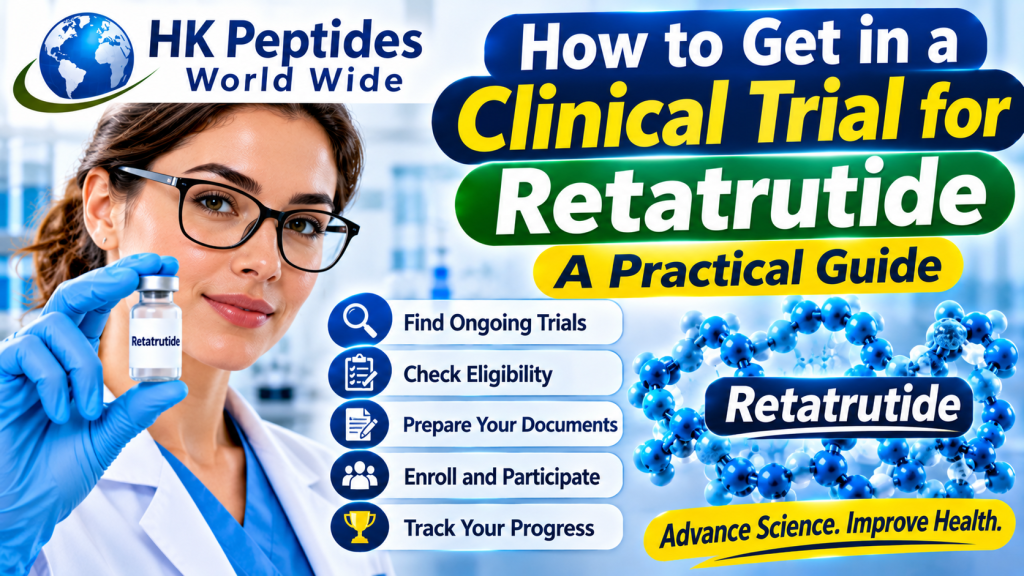
How to Get in a Clinical Trial for Retatrutide: A Practical Guide
Nov
Retatrutide is one of the most closely watched investigational drugs in metabolic medicine, and demand for access is high. If you are asking how to get in a clinical trial for retatrutide, the short answer is that you cannot simply sign up—participation is limited to people who match a study’s eligibility rules and are accepted at an active research site. The practical path runs through trial registries, academic and private research centers, and a screening process that verifies your health history and current medications.
This guide explains who runs retatrutide trials, how eligibility is decided, what screening involves, and how to tell a legitimate study from a paid “access” offer. It also covers what to do if no trial fits your situation, including the rules around compounded and research-only peptides.
What Is Retatrutide and Why Are Trials in Demand?
Retatrutide is an investigational injectable drug that acts on three hormone receptors at once—GIP, GLP-1, and glucagon. That triple-agonist design is what separates it from current GLP-1 medications, and it is the main reason researchers and patients are paying attention. The drug is being developed by Eli Lilly and has not been approved by the U.S. Food and Drug Administration for any use.
Because it is unapproved, the only legitimate way to receive retatrutide is through a registered clinical trial or an expanded-access program, if one exists. Buying it from a website or a wellness clinic is not the same thing, and those products are not regulated as approved medicines. For context on how investigational and research peptides are discussed and sourced, see this overview of peptide research resources.
Demand is also driven by the wider interest in weight-loss and metabolic drugs. Many people who have tried or been told about semaglutide and tirzepatide want to know whether a next-generation option is available. The honest answer: only through research, and only if you qualify.
How Clinical Trials for Retatrutide Are Structured
Retatrutide studies are sponsored by the manufacturer and run at hospitals, academic medical centers, and dedicated clinical research sites. Most are randomized, double-blind, placebo-controlled trials, which means some participants receive a placebo or a comparator drug rather than retatrutide. You will be told which trial design you are entering before you consent.
Trials are organized into phases. Early-phase studies focus on safety and dosing in small groups, while later-phase studies measure effectiveness in larger populations. Recruitment tends to concentrate in larger metropolitan areas, but some sites run satellite locations and remote-friendly visits for certain follow-ups. Travel requirements vary widely, so confirm visit frequency before you commit.
Phase 1, 2, and 3: What Each Means for You
Phase 1 trials usually involve the most frequent monitoring and the smallest number of participants. Phase 2 studies expand to more people and start measuring outcomes like weight change and blood sugar. Phase 3 trials are the largest and typically the most rigorous, and they are the ones most people hope to join.
Later-phase trials often have stricter eligibility criteria and longer commitments—sometimes a year or more. If you are willing to enroll in an earlier-phase study, your odds of finding an open slot may be better, though the trade-off is more uncertainty about benefit.
Step-by-Step: How to Get in a Clinical Trial for Retatrutide
Getting into a trial is a process of matching, screening, and consent. Treat it like a structured application rather than a sign-up form.
Step 1: Search Official Registries
Start with ClinicalTrials.gov, the U.S. government database maintained by the National Library of Medicine. Search “retatrutide” and filter by recruitment status, location, and condition. The World Health Organization’s International Clinical Trials Registry Platform is a useful secondary source for studies listed outside the U.S.
Read each listing carefully. Look at the eligibility section, the study locations, and the “contacts and locations” tab for the site coordinator’s details. Registry listings are updated by sponsors, so check the last-updated date and call the listed contact rather than relying on a third-party aggregator.
Step 2: Contact Study Sites Directly
Call or email the site coordinator listed for the trial nearest you. Coordinators are used to inquiries and can tell you quickly whether the study is still enrolling and whether your basic profile fits. Ask about the number of visits, the expected duration, travel reimbursement, and whether the study pays for related medical care.
If the nearest site is full, ask whether they know of other sites running the same protocol. Research networks often share information, and a coordinator at one center can point you toward another.
Step 3: Prepare Your Medical and Medication History
Screening moves faster when you arrive prepared. Gather recent lab results, a medication list, and a summary of relevant diagnoses such as type 2 diabetes, obesity, or cardiovascular conditions. Be accurate about supplements, including peptides and over-the-counter products, because undisclosed products can disqualify you or create safety risks.
You will likely be asked about prior weight-loss drug use, thyroid history, pancreatic issues, and family history of certain cancers. Answer honestly—trial staff are not there to judge, and incomplete information can put you at risk during the study.
Step 4: Understand the Eligibility Criteria
Eligibility rules are specific and are not negotiable. Common criteria for metabolic-drug trials include a body mass index within a set range, a diagnosis such as type 2 diabetes or obesity, age limits, and stable weight for a period before screening. Some trials exclude people with certain medical histories or recent use of GLP-1 drugs.
Read the inclusion and exclusion lists line by line. If you clearly fail a key criterion, contact the site anyway and ask about related studies—you may qualify for a different protocol. For background on how peptide-based therapies are evaluated and discussed, this guide to peptide therapy research can help you frame better questions.
Step 5: Complete Screening and Informed Consent
Screening usually includes a phone pre-screen, an in-person visit, blood work, vital signs, and a physical exam. Some trials add an ECG or imaging. If you pass, you will go through informed consent, a conversation in which staff explain the risks, benefits, and your right to withdraw at any time.
Take the consent form home and read it. Ask about side effects observed in earlier phases, what happens if you have an adverse reaction, and whether you can continue your usual care. Consent is a process, not a signature—you can ask questions at any point.
Who Is Eligible? Common Inclusion and Exclusion Criteria
Eligibility varies by trial, but patterns are consistent. Understanding them helps you decide where to focus your search.
| Criterion | Typical Requirement | Notes |
|---|---|---|
| Age | Adults, often 18–75 | Varies by protocol |
| Body mass index | A defined range tied to the study population | Some trials target obesity, others diabetes |
| Diagnosis | Obesity, type 2 diabetes, or a related condition | Depends on the trial’s focus |
| Prior GLP-1 use | Often restricted or requires a washout period | Disclose all prior use |
| Medical history | Excludes certain thyroid, pancreatic, or cancer histories | Screening verifies this |
| Medication use | May exclude interacting drugs or supplements | Be precise about everything you take |
These are general patterns, not a checklist for any single study. Always rely on the official listing for the trial you are considering.
What Participation Involves: Visits, Monitoring, and Costs
Participants typically attend regular clinic visits, receive injections or placebo, and complete blood tests and questionnaires. Visit frequency depends on the phase and protocol—early studies may require weekly visits, while later studies may space them out. Some trials use phone or app-based check-ins between visits.
Most sponsors cover study-related procedures and provide reimbursement for travel or time. You should not assume participation is free of indirect costs, such as missed work or childcare. Ask the coordinator for a written summary of what is and is not covered.
You can leave a trial at any time, for any reason. If you withdraw, the study team may ask for a final safety visit, and your regular doctor should be informed so your care continues smoothly.
Red Flags: How to Spot Scams and Unapproved Access
The gap between demand and availability has created a market for questionable offers. Be cautious of anyone who guarantees enrollment in a retatrutide trial for a fee, promises the drug without a screening process, or sells “research-grade” retatrutide for personal use. Legitimate trials do not charge you to enroll.
Also treat social media ads, influencer promotions, and pop-up clinics with skepticism unless they connect to a registry-listed study at a verifiable institution. If a website cannot name the sponsor, the principal investigator, or the IRB overseeing the study, walk away. For broader context on how research peptides are positioned and the limits of unapproved products, see this resource on peptide sourcing standards.
If You Do Not Qualify: Realistic Alternatives
Not everyone will match an open retatrutide trial. That is common and not a reflection of your health. Reasonable next steps include asking your clinician about FDA-approved GLP-1 and dual-agonist options, watching registries for new trials, and discussing whether any expanded-access program applies to your situation.
Be wary of compounded versions marketed as “the same as retatrutide.” Compounded drugs are not FDA-approved, and retatrutide is not an approved ingredient, so claims of equivalence are unsupported. Your prescriber can help you weigh approved options against the risks of unapproved products.
Frequently Asked Questions
Can I join a retatrutide trial if I have already taken a GLP-1 drug?
Sometimes, but many protocols require a washout period or exclude recent users. Disclose your full history and let the site coordinator confirm whether you are eligible for a specific study.
Does it cost money to participate in a clinical trial?
Legitimate trials generally do not charge for enrollment, and sponsors usually cover study-related procedures. Ask about reimbursements and any indirect costs before you consent.
How long does it take to get accepted into a trial?
Timelines vary. A pre-screen can happen within days, while full screening and enrollment may take several weeks depending on the site’s schedule and your test results.
Where can I find retatrutide trials near me?
Search ClinicalTrials.gov by drug name and filter for recruiting studies in your state or region. Then contact the listed site coordinator directly to confirm availability.
Is retatrutide available through expanded access?
Expanded access depends on the sponsor and is not guaranteed for any investigational drug. Ask your physician to check with the manufacturer and review registry listings for any current program.
Can I buy retatrutide online instead?
Retatrutide is not FDA-approved, and products sold online as retatrutide are unregulated. Buying them carries safety and legal risks, so discuss approved alternatives with a licensed clinician.
Key Takeaways
- Retatrutide is investigational and only available through registered clinical trials or, if offered, expanded access.
- Start with ClinicalTrials.gov, then call site coordinators directly and prepare your medical records.
- Eligibility criteria are strict; read inclusion and exclusion rules and disclose all medications honestly.
- Screening and informed consent come before enrollment, and you can withdraw at any time.
- Avoid anyone who guarantees access for a fee or sells unapproved retatrutide for personal use.
