
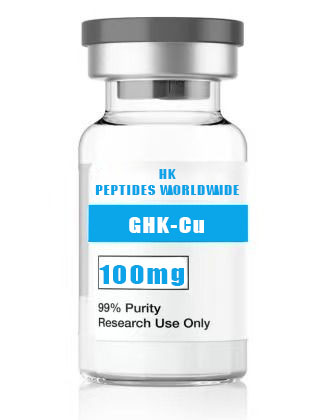
GHK-Cu 100 mg Copper Peptide Research Compound: A Buyer’s Guide for US Labs
For research teams in the United States, sourcing a GHK-Cu 100 mg copper peptide research compound starts with three practical questions: what the material actually is, how it is verified, and which supplier can document both. This guide walks through the science, the specifications, and the purchasing considerations that matter when you order GHK-Cu 100 mg online for laboratory work.
Whether you are equipping a cell-culture bench, planning a pilot study, or arranging a GHK-Cu 100 mg bulk order for a shared facility, the same standards apply. Quality documentation, consistent specifications, and transparent sourcing separate a serious laboratory supply partner from a casual reseller.
What Is a GHK-Cu 100 mg Research Compound?
GHK-Cu is a copper-binding tripeptide — the sequence glycyl-L-histidyl-L-lysine complexed with a copper(II) ion. Researchers have studied it since the 1970s in the context of wound healing, collagen synthesis, and skin biology, and it remains a model compound in dermatological and tissue-repair research.
A “100 mg” listing describes the quantity of peptide in a single vial rather than its concentration. The label should state net peptide content, so buyers can calculate the exact amount they need for a given study. Laboratories typically reconstitute the lyophilized powder with a suitable solvent and prepare working dilutions from there.
Importantly, this is a research-use-only material. It is not a drug, cosmetic ingredient, or dietary supplement, and it is not intended for human or veterinary use. That distinction matters for how you handle, store, and document it in a US lab.
Why Researchers Choose the Copper Peptide Format
The copper complex is central to how GHK-Cu behaves in experimental systems. Copper ions influence oxidative signaling, and the peptide itself is a natural carrier for them. Researchers studying extracellular matrix remodeling often select the copper-bound form because it mirrors the physiological complex more closely than the free peptide.
Key Specifications to Check Before You Buy
A GHK-Cu 100 mg vial for sale should come with more than a price tag. The following specifications are worth confirming with any candidate supplier:
- Identity and purity: Certificates of analysis (COA) typically report high-performance liquid chromatography (HPLC) purity and mass spectrometry confirmation.
- Copper content: Because the compound is a complex, reputable suppliers sometimes report copper loading alongside peptide content.
- Physical form: Lyophilized blue powder is the standard presentation; the characteristic blue color reflects the copper complex.
- Net peptide content: This figure tells you how much peptide is present versus total vial mass, which is essential for accurate reconstitution math.
- Storage conditions: Cool, dry, and protected from light; check whether the supplier ships with appropriate temperature control.
If a supplier cannot provide batch-specific documentation, treat that as a red flag regardless of how attractive the GHK-Cu 100 mg product price appears. Reliable research peptide sourcing begins with verifiable paperwork.
Documentation That Should Accompany Every Batch
At minimum, expect a COA tied to the specific lot number on your vial. Good practice also includes a batch record, a clear purity figure, and a date of manufacture. Some buyers also ask for third-party test reports — an increasingly common expectation in the US research supply market.
How to Order GHK-Cu 100 mg Online in the USA
Purchasing research peptides online generally follows a predictable flow: verify the supplier, confirm batch documentation, place the order, and review shipping and storage terms on arrival. Each step protects your study from avoidable variables.
Start by confirming the supplier’s US shipping policy and typical lead times. Temperature-sensitive materials benefit from insulated packaging, and you should know in advance how the product will travel to your facility. If your lab operates under institutional procurement rules, check that the supplier can issue documentation suitable for those requirements.
When you order GHK-Cu 100 mg online, also confirm the exact product format — vial size, fill weight, and whether a solvent is included. Clear product pages and responsive support make a real difference here.
Questions to Ask a GHK-Cu 100 mg Online Supplier
- Can you share a batch-specific COA before purchase?
- What is the reported purity and the method used to determine it?
- How is the product packaged and shipped to US addresses?
- What storage and handling guidance do you recommend?
- Can you confirm current GHK-Cu 100 mg peptide availability before I commit?
Straight answers to these questions usually separate a professional operation from a drop-shipper. Ask them early, and ask them of more than one vendor.
Wholesale and Bulk Options for Institutions
University labs, contract research organizations, and multi-site research groups often need more than a single vial. A GHK-Cu 100 mg wholesale arrangement can reduce per-unit costs and, more importantly, ensure a consistent lot across a study.
Bulk purchasing introduces its own considerations. You will want to confirm that larger orders are drawn from the same or closely matched production batches, and that documentation scales with the order. For a GHK-Cu 100 mg bulk order, ask about lead time, packaging at higher quantities, and whether the supplier can hold inventory for scheduled replenishment.
Planning Your GHK-Cu 100 mg Laboratory Supply
Forecast consumption based on your protocol rather than guesswork. Map out how many reconstitutions a study requires, how long reconstituted material remains usable under your storage conditions, and whether your team can share stock responsibly. A consistent laboratory supply plan prevents mid-study shortages and the batch variability that comes with scrambling to reorder.
Sourcing from a GHK-Cu 100 mg Manufacturer vs. a Reseller
The distinction between a manufacturer and a reseller is not cosmetic. Manufacturers control synthesis and quality control, which often means better traceability when something needs to be investigated. Resellers can be perfectly reputable, but they depend on upstream partners for documentation.
Ask directly who produces the compound and whether the supplier can trace a vial back to its production run. In the US market, transparency about origin is a reasonable expectation for any GHK-Cu 100 mg research supply purchase.
What “Premium” Should Mean
“Premium GHK-Cu 100 mg peptide” is a marketing phrase until it is backed by evidence. In practice, premium should mean documented purity, batch-level consistency, secure packaging, and responsive technical support. It should not simply mean a higher price.
Evaluate suppliers using the same criteria each time. That way, your procurement decision rests on verifiable factors rather than claims. A supplier that welcomes scrutiny is generally the one worth keeping on your approved vendor list.
Handling and Storage in Laboratory Research
GHK-Cu 100 mg laboratory research work benefits from disciplined handling. Lyophilized peptide is generally stable for extended periods when kept cool, dry, and dark, but reconstituted solutions have much shorter working lives and are sensitive to temperature and repeated freeze-thaw cycles.
Follow your institution’s protocols for preparation, labeling, and disposal. Record lot numbers in your lab notebook so that any anomaly can be traced to a specific batch. Small habits like these protect the integrity of your results.
Reconstitution Basics for New Bench Staff
Reconstitute gently to avoid foaming, use appropriate sterile technique, and prepare only what you will use within a reasonable window. Where the study permits, aliquot reconstituted material to reduce freeze-thaw stress. Consult published protocols for the specific solvent and concentration your assay requires rather than assuming a single standard approach.
Safety, Compliance, and the Research-Use-Only Boundary
In the United States, research peptides occupy a specific regulatory space. They are supplied for laboratory investigation and are not approved for human use, therapeutic applications, or cosmetic formulation. Buyers should understand this boundary before purchase.
Institutions often require that research-use-only materials be received by qualified personnel and stored in controlled areas. Confirm your facility’s requirements with your safety office, and follow applicable institutional and local regulations. When in doubt, treat documentation as part of compliance rather than an optional extra.
Comparing GHK-Cu 100 mg Product Availability and Price
Price matters, but it should be weighed against documentation quality, shipping reliability, and lot consistency. A slightly higher price for a fully documented vial is usually the better research investment than a bargain with unclear provenance.
Availability is the other variable. Ask whether the product is in stock, how often batches are produced, and what the typical restock window looks like. Suppliers who communicate openly about GHK-Cu 100 mg peptide availability make it far easier to plan studies without disruptions.
Building a Repeatable Procurement Checklist
- Verify current stock and batch documentation.
- Confirm shipping method and expected transit time.
- Check that the COA lot number matches your vial.
- Record receipt date and storage location.
- Review handling instructions with everyone on the bench.
A short checklist like this takes minutes and pays for itself across a multi-month study. It also makes internal reporting to principal investigators and procurement offices straightforward.
Frequently Asked Questions
What does “GHK-Cu 100 mg” mean on a product listing?
It usually refers to the total peptide quantity in a single vial, not the concentration. Always confirm net peptide content and vial format before ordering.
Is GHK-Cu approved for human use in the United States?
No. GHK-Cu is supplied as a research-use-only compound and is not approved for human therapeutic, cosmetic, or veterinary applications.
How should I store a GHK-Cu 100 mg vial?
Keep lyophilized powder cool, dry, and protected from light, and follow the supplier’s storage guidance. Reconstituted solutions require careful temperature control and should be handled according to your laboratory’s protocols.
Can I place a bulk or wholesale order?
Many suppliers support wholesale and bulk purchasing for institutions. Confirm batch consistency, documentation at scale, and lead times before committing to a larger order.
What documentation should accompany my order?
A batch-specific certificate of analysis with purity data is the baseline. Supporting batch records and clear storage guidance add confidence.
How do I verify a supplier before ordering?
Ask for a current COA, confirm the production source, review shipping and storage terms, and check that the supplier responds clearly to technical questions.
Choosing a Reliable GHK-Cu 100 mg Online Supplier
The right partner for your GHK-Cu 100 mg copper peptide research compound is the one that treats documentation, consistency, and communication as part of the product. Compare suppliers against the same checklist, request batch-level evidence, and confirm that storage and shipping terms match your facility’s capabilities. For US labs, HK Peptides Worldwide offers a starting point for reviewing current product listings and research supply options.
Reviews
There are no reviews yet.