
Uncategorized
Introduction: Why GHK-Cu Peptide Is a Major Focus in Research
Jul
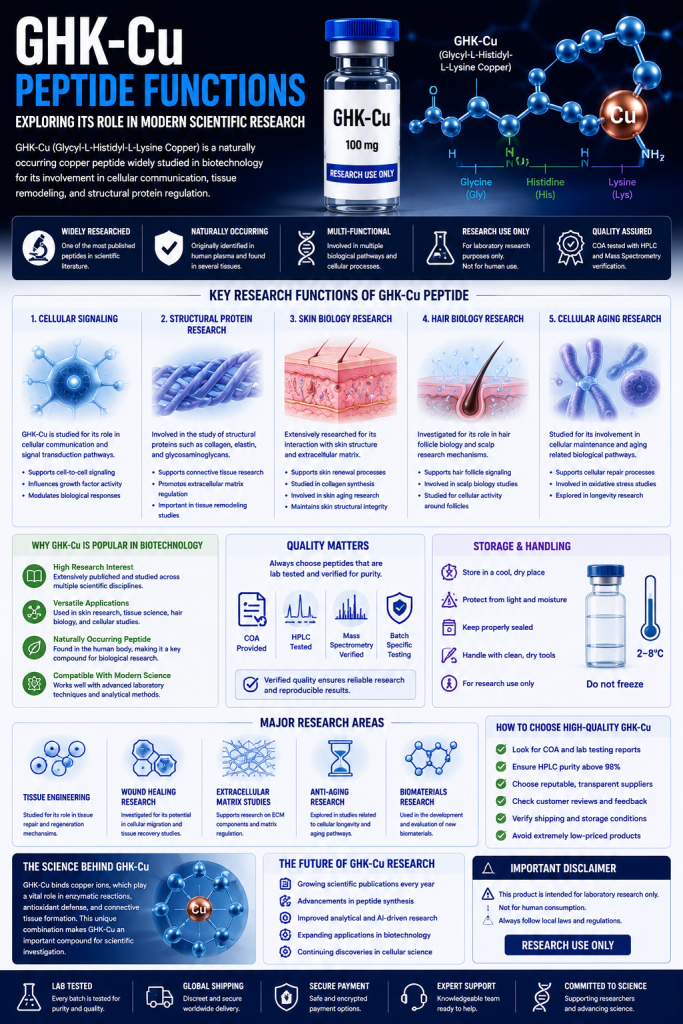
GHK-Cu (Glycyl-L-Histidyl-L-Lysine Copper) is one of the most extensively researched copper peptides in biotechnology and regenerative science. Originally identified in human plasma, this naturally occurring peptide has become a significant subject of laboratory research because of its involvement in cellular communication, tissue biology, and structural protein research.
Over the past decade, scientific interest in GHK-Cu has expanded into fields such as skin biology, connective tissue research, hair biology, and cellular aging studies. Researchers continue to investigate how this peptide interacts with biological pathways involved in tissue remodeling, extracellular matrix regulation, and cellular signaling.
As laboratory technologies continue to improve, GHK-Cu remains one of the most studied peptides for understanding normal biological processes and molecular communication.
This guide explores the primary functions of GHK-Cu peptide in scientific research, why it is widely studied, and what makes it one of the most recognized research peptides available today.
What Is GHK-Cu?
Understanding GHK-Cu
GHK-Cu is a naturally occurring tripeptide composed of three amino acids:
- Glycine
- Histidine
- Lysine
When bound to copper ions, it forms the copper peptide known as GHK-Cu.
Researchers study this peptide because it participates in multiple biological signaling pathways and is naturally present in several human tissues.
Why Researchers Study GHK-Cu
Scientists investigate GHK-Cu because of its involvement in several important biological processes, including:
- Cellular communication
- Tissue remodeling
- Structural protein regulation
- Extracellular matrix biology
- Molecular signaling
Its broad biological activity makes it an important research tool across multiple scientific disciplines.
Commonly Studied Functions of GHK-Cu
Cellular Signaling
One of the primary functions of GHK-Cu is its role in cellular signaling.
Researchers study how it influences communication between cells involved in tissue maintenance and biological regulation.
This area continues to receive significant attention in molecular biology.
Structural Protein Research
GHK-Cu is frequently investigated for its interaction with structural proteins that help maintain tissue integrity.
Research commonly focuses on:
- Connective tissue biology
- Extracellular matrix studies
- Cellular organization
- Tissue remodeling mechanisms
These investigations help scientists better understand normal tissue function.
Skin Biology Research
Skin research represents one of the largest areas of GHK-Cu investigation.
Researchers study GHK-Cu in relation to:
- Skin structure
- Cellular renewal
- Extracellular matrix regulation
- Biological aging processes
Because of these research interests, GHK-Cu is widely recognized in cosmetic and dermatological science
Hair Biology Research
Another growing area of research involves hair follicle biology.
Scientists investigate GHK-Cu to better understand:
- Hair follicle signaling
- Cellular activity
- Skin and scalp biology
- Structural tissue interactions
Research in this area continues to expand.
Cellular Aging Research
GHK-Cu is also commonly discussed in studies examining normal biological aging.
Researchers investigate its interaction with:
- Cellular maintenance pathways
- Tissue remodeling
- Biological signaling systems
- Molecular regulation
These studies contribute to a better understanding of age-related biological processes.
Why GHK-Cu Is Popular in Biotechnology
High Research Interest
GHK-Cu is one of the most published peptides in scientific literature due to its broad range of research applications.
Its versatility allows researchers to investigate multiple biological systems using one peptide compound.
Compatibility With Modern Laboratory Technology
Modern laboratories use advanced technologies to study GHK-Cu, including:
- High-resolution analytical instruments
- Molecular biology techniques
- Artificial intelligence modeling
- Advanced peptide synthesis
These tools continue expanding knowledge about GHK-Cu biology.
Importance of Peptide Quality
Laboratory Verification
Researchers typically prefer GHK-Cu products supported by:
- Certificates of Analysis (COAs)
- HPLC testing
- Mass Spectrometry verification
- Batch-specific documentation
Quality verification supports reliable scientific research.
Learn more in our guide on COA Tested Peptides.
Supplier Transparency
Reliable suppliers often provide:
- Analytical reports
- Product specifications
- Batch tracking
- Storage recommendations
Transparency helps researchers evaluate product quality before purchase.
Read our article on Supplier Transparency.
Storage and Handling
Proper storage helps maintain peptide stability during research.
Laboratories commonly recommend:
- Cool storage conditions
- Protection from moisture
- Secure packaging
- Proper labeling
Correct handling supports consistent research outcomes.
Future Directions in GHK-Cu Research
Research involving GHK-Cu continues to expand into areas such as:
- Molecular biology
- Regenerative science
- Tissue engineering
- Biomaterials research
- Advanced biotechnology
As analytical technologies improve, scientists expect to gain a deeper understanding of GHK-Cu and its biological functions.
Choosing High-Quality GHK-Cu Peptides
Researchers often evaluate suppliers based on:
- Verified COAs
- HPLC purity reports
- Batch consistency
- Transparent quality control
- Reliable customer support
High-quality products help improve laboratory reproducibility and confidence.
Frequently Asked Questions (FAQ)
What is GHK-Cu?
GHK-Cu is a naturally occurring copper peptide composed of glycine, histidine, lysine, and a copper ion. It is widely studied in biotechnology and molecular research.
Why is GHK-Cu popular in research?
Researchers study GHK-Cu because of its involvement in cellular signaling, tissue biology, skin research, and structural protein regulation.
Why is laboratory testing important?
Testing methods such as HPLC and Mass Spectrometry help verify peptide identity and purity.
What should researchers look for when purchasing GHK-Cu?
Researchers typically prioritize COA-tested products, transparent suppliers, and consistent quality standards.
Is GHK-Cu widely researched?
Yes. GHK-Cu is one of the most extensively studied peptides in modern biotechnology and regenerative research.
