
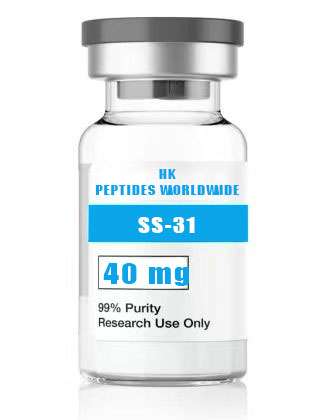
SS-31 40 mg Advanced Mitochondrial Research Peptide USA
Original price was: $314.00.$297.00Current price is: $297.00.
Bulk Price for 10 Vials,
Research-grade SS-31 (elamipretide) 40 mg lyophilized peptide for mitochondrial studies, supplied with purity and certificate of analysis information for laboratory use only.
SS-31 40 mg Advanced Mitochondrial Research Peptide USA
SS-31 40 mg Advanced Mitochondrial Research Peptide USA is a laboratory-grade research compound supplied for studies of mitochondrial function and cellular energy metabolism. The peptide is widely known in scientific literature as elamipretide, a synthetic tetrapeptide designed to interact with cardiolipin on the inner mitochondrial membrane. This guide explains what the 40 mg presentation is, how researchers typically approach it, and what to consider before purchasing SS-31 peptides supply in the United States.
Researchers, laboratory managers, and life-science procurement teams in the United States are the primary audience for this material. The focus here is on research context, specification literacy, handling, and responsible sourcing rather than any therapeutic or human-use application.
What Is SS-31 and Why Mitochondria Matter
Mitochondria generate most of the ATP that powers cells, and their inner membrane depends on a phospholipid called cardiolipin to maintain structure and organization. SS-31 is a small synthetic peptide studied for its ability to associate with cardiolipin and support membrane integrity in experimental models. Because mitochondrial decline appears in many areas of biomedical research, from aging biology to metabolic and cardiovascular studies, SS-31 has become a frequently referenced tool compound.
The peptide is sometimes discussed under the name elamipretide or by early research designations such as MTP-131. In laboratory settings it is generally handled as a lyophilized (freeze-dried) powder that is reconstituted before use, which is why the milligram quantity and purity matter so much to buyers.
SS-31 vs. Other Mitochondrial Research Peptides
SS-31 is often compared with peptides such as MOTS-c and humanin, but its proposed mechanism is distinct. Rather than acting as a signaling hormone, SS-31 is studied primarily for its interaction with mitochondrial membranes. That difference shapes experimental design: studies tend to focus on membrane stability, oxidative stress markers, and energy output rather than endocrine pathways.
For a broader view of the research catalog, the HK Peptides Worldwide peptide collection organizes compounds by category so buyers can compare specifications side by side.
What “40 mg” Means in SS-31 Research Peptide Supply
The “40 mg” in SS-31 40 mg Advanced Mitochondrial Research Peptide USA refers to the total mass of lyophilized peptide in a single vial. It is a larger quantity than the smaller vials often sold for pilot work, which suits laboratories planning repeated experiments or multi-arm studies. Vial size is a logistical detail, not a dosing instruction: research quantities are determined by study protocol and the researcher’s own method development.
Buyers should confirm the net peptide content rather than only the vial fill weight. High-quality suppliers list purity (often expressed as a percentage by HPLC analysis), provide a certificate of analysis, and state whether the figure reflects the peptide itself. A quality-focused SS-31 peptide supply should make these details easy to find before checkout.
Purity, Certificate of Analysis, and Batch Consistency
Three specification checks matter most for any research peptide:
- Purity: Reverse-phase HPLC results show how much of the material is the target peptide.
- Identity: Mass spectrometry confirms the molecular weight matches SS-31.
- Batch documentation: A certificate of analysis tied to a specific lot number supports reproducibility across experiments.
Batch-to-batch consistency matters in research because subtle changes in purity can influence results. When evaluating SS-31 for sale listings, request the lot-specific analysis instead of relying on a generic sample document.
SS-31 in USA Research Contexts
In the United States, SS-31 appears in published research on mitochondrial dysfunction, ischemia-reperfusion models, skeletal muscle energetics, and age-related cellular decline. The peptide is a research tool, and it is not approved by the FDA for human use. Buyers should note that regulatory status carefully, because marketing language sometimes blurs the line between laboratory compounds and medicines.
Federal guidance from the U.S. Food and Drug Administration and general laboratory safety standards from institutions such as the National Institutes of Health are useful starting points for compliance questions. Institutions conducting peptide research should also follow their own biosafety and institutional review processes.
Where to Buy SS-31: Evaluating Suppliers
The search “where to buy SS-31” returns a wide range of vendors with very different standards. A credible supplier typically offers transparent specifications, third-party testing documentation, and clear shipping information for the United States. Researchers searching for SS-31 near me likely want domestic shipping reliability, but geography alone is not a quality signal.
When comparing suppliers, check:
- Whether purity and testing methods are disclosed.
- Whether the certificate of analysis is lot-specific and dated.
- Whether storage and shipping conditions are described.
- Whether the supplier clearly labels products for research use only.
The SS-31 product details at HK Peptides Worldwide show the specification format buyers should expect, including quantity and analysis information. For context on how peptides are sourced and handled in research supply chains, the Wikimedia Commons scientific media archive hosts open molecular and laboratory imagery that can help with educational materials.
SS-31 40 mg Online vs. Domestic Stock
SS-31 40 mg online listings may ship from domestic warehouses or from overseas. Domestic stock can shorten transit time, which matters because temperature excursions can affect peptide stability. International shipments may take longer and pass through customs, so buyers should verify the supplier’s shipping terms and any documentation requirements before ordering.
SS-31 Dosage: What the Literature Actually Covers
Searches for SS-31 dosage usually come from people seeking a standardized number. No universal research dosage exists, because study designs differ in species, model, delivery route, and measured endpoints. Some published animal and early human studies describe specific protocols, but those parameters are study-specific and should not be treated as recommendations.
For laboratory work, the relevant question is how the compound is prepared and measured in a controlled experiment, not a blanket dose. Researchers should consult primary literature, institutional protocols, and their own method development. This article deliberately avoids giving a fixed dose because doing so would misrepresent the nature of research use.
Storage and Reconstitution Basics
Lyophilized SS-31 is generally stored cold, protected from light, and away from moisture, following the supplier’s stated conditions. Reconstitution requires a suitable solvent, careful handling, and sterile technique in a laboratory environment. Aliquoting before freezing reduces repeated freeze-thaw cycles, which can degrade peptide integrity over time.
Is SS-31 40 mg Right for Your Research?
The 40 mg vial suits laboratories that need a larger, consistent batch for extended studies. Smaller quantities may be more appropriate for pilot work or single assays where waste reduction is the priority. The right choice depends on study scale, storage capacity, and budget rather than on any inherent advantage of a larger vial.
Researchers should also weigh documentation needs. Multi-arm studies benefit from a single lot with a verified certificate of analysis, since consistent starting material supports reproducibility. If a study spans months, confirm the supplier can provide matching lots later.
Key Takeaways for Buyers
SS-31 is a research compound studied for mitochondrial membrane interactions, not an approved therapeutic. The 40 mg presentation is a quantity specification, not a dosing guide. Buyers should prioritize purity data, lot-specific testing, clear storage guidance, and research-use-only labeling. Searches such as SS-31 in USA or SS-31 for sale are best answered by supplier transparency rather than by price alone.
FAQ
What is SS-31 40 mg?
It is a vial containing 40 milligrams of lyophilized SS-31 peptide intended for laboratory research. The quantity refers to the mass of peptide material, not a dose.
Is SS-31 approved for human use in the United States?
No. SS-31 is a research compound and is not FDA-approved as a drug. It is supplied for laboratory investigation only.
How should SS-31 be stored?
Follow the supplier’s certificate of analysis and label. In general, lyophilized peptides are kept cold, dry, and protected from light, with reconstituted material handled per laboratory protocol.
Where can researchers buy SS-31 40 mg online?
Look for suppliers that publish purity data, provide lot-specific certificates of analysis, and state shipping conditions clearly. HK Peptides Worldwide is one source that lists product specifications for review.
Is there a standard SS-31 dosage?
No universal research dosage exists. Parameters vary by species, model, route, and endpoints in published studies, so researchers should rely on primary literature and their own approved protocols.
Does vial size affect peptide stability?
Vial size itself does not, but how often a vial is opened and reconstituted can. Aliquoting into smaller portions reduces repeated handling and freeze-thaw exposure.
Be the first to review “SS-31 40 mg Advanced Mitochondrial Research Peptide USA”
Related products
Research Grade Peptide
Research Grade Peptide
Research Grade Peptide

Research Grade Peptide
Research Grade Peptide
Research Grade Peptide
Research Grade Peptide
Research Grade Peptide
Reviews
There are no reviews yet.